


Key Takeaways
- Most dads don't struggle with not trying hard enough. They struggle with never fully stopping — and there's a real physiological cost to a brain that never gets to decompress.
- An evening routine doesn't have to be elaborate. A few consistent habits — especially around light, screen time, and mental transition — can make a significant difference in how rested you actually feel.
- The environment you unwind in matters as much as what you do. A bedroom that sends the right signals at the end of the day isn't a luxury — it's one of the simplest things you can change.
Every Father's Day, the conversation turns to gifts. What to buy, what to give, what would make him feel appreciated.
And that instinct is a good one. But if you ask most dads — honestly — what they actually want more of, the answer is rarely a thing. It's time. Quiet. The feeling of having actually rested, not just slept.
A lot of dads are running on a deficit they've stopped noticing. The workday ends, but the mental load doesn't. The kids go to bed, but the to-do list is still open. By the time the house is finally quiet, there's maybe an hour before the alarm goes off again — and most of it gets spent staring at a phone.
This isn't a productivity problem. It's a recovery problem. And it's one worth actually solving.
Table of Contents
Why Many Dads Never Fully Switch Off
There's a version of fatherhood that looks like this: you're present, you're engaged, you're handling things. Work calls get answered. School forms get signed. The dishwasher gets emptied. You show up for all of it.
What doesn't get as much attention is the cognitive overhead that comes with all of it running simultaneously. The background processing — the mental tabs that stay open even when you're technically off the clock. Did I follow up on that? What's happening this weekend? Is the car due for a service? Did I say the right thing earlier?
For new parents, this is especially acute. The unpredictability of early parenthood doesn't just disrupt sleep — it disrupts the nervous system's ability to trust that rest is safe. The brain stays in a low-level alert state for months, sometimes years, even after the acute phase has passed.
But it's not just new dads. The pattern tends to persist. The responsibilities change shape, but the mental load doesn't really lighten — it just diversifies. And the habit of never fully switching off becomes, over time, just the way things are.
The problem isn't a lack of trying. It's that recovery requires a genuine transition — and most evenings don't have one.
What Happens When Your Brain Never Gets a Chance to Rest
Chronic stress and chronic sleep disruption are closely linked — and they reinforce each other in ways that compound quietly over time.
When your nervous system stays in an activated state through the evening — sustained by bright screens, background noise, unresolved mental tasks, and the ambient stimulation of modern life — it doesn't naturally downshift into the parasympathetic state that precedes good sleep. You can be physically exhausted and mentally unable to stop. The tiredness is real; the rest doesn't come.
Over weeks and months, this shows up as more than just feeling groggy. Sustained poor sleep affects mood, patience, cognitive sharpness, and the ability to be present — exactly the qualities most dads are trying to bring to their families and their work. The irony is that the drive to stay on top of everything can erode the very capacity that makes staying on top of things possible.
None of this requires a dramatic intervention to improve. But it does require a deliberate one. The evening hours — however few there are — need to do something different than the daytime hours. They need to signal a shift.
5 Relaxing Things to Do Before Bed
These aren't hacks. They're small, sustainable adjustments that compound over time — the kind that quietly change how you feel in the morning without requiring a personality overhaul.
1. Put Your Phone Away Earlier
This is the one most people already know and still don't do. So rather than relitigating why screens are bad before bed, it's worth asking a different question: what would you do with that time instead?
The phone fills a need — usually decompression, sometimes connection, sometimes just the low-effort stimulation of something that requires nothing from you. The goal isn't to replace it with something virtuous. It's to replace it with something that actually works better for recovery. Anything that is quieter, slower, and less interactive will do the job.
Start with 30 minutes earlier than usual. That's enough to feel the difference.
2. Dim the Lights
Bright overhead lighting in the evening keeps your nervous system reading the room as daytime. It suppresses melatonin — the hormone that creates the biological drift toward sleep — and signals alertness at exactly the moment you're trying to wind down.
Switching to warmer, lower light sources in the hour before bed is one of the least effortful changes you can make, and the effect on sleep onset is real. Lamps instead of overheads. Warm bulbs instead of cool-white. The room should feel like evening, not like a workspace.
3. Read Something Non-Work Related
Reading before bed works partly because it's absorbing enough to quiet the mental loop, and partly because it's passive in a way that screens aren't — it doesn't talk back, it doesn't notify you, and it doesn't show you anything designed to provoke a reaction.
The subject matter matters more than most people think. Anything that activates problem-solving, anxiety, or professional thinking keeps the work mode running. Fiction, history, biography, long-form writing on topics you're genuinely curious about — these engage the mind just enough to give it somewhere to go, without keeping it on high alert.
Even twenty minutes makes a difference when it's consistent.
4. Create a Calmer Sleep Environment
The bedroom environment sends signals to your brain about what kind of state it should be in. Most bedrooms, with their overhead LEDs and nearby screens, are sending the wrong ones.
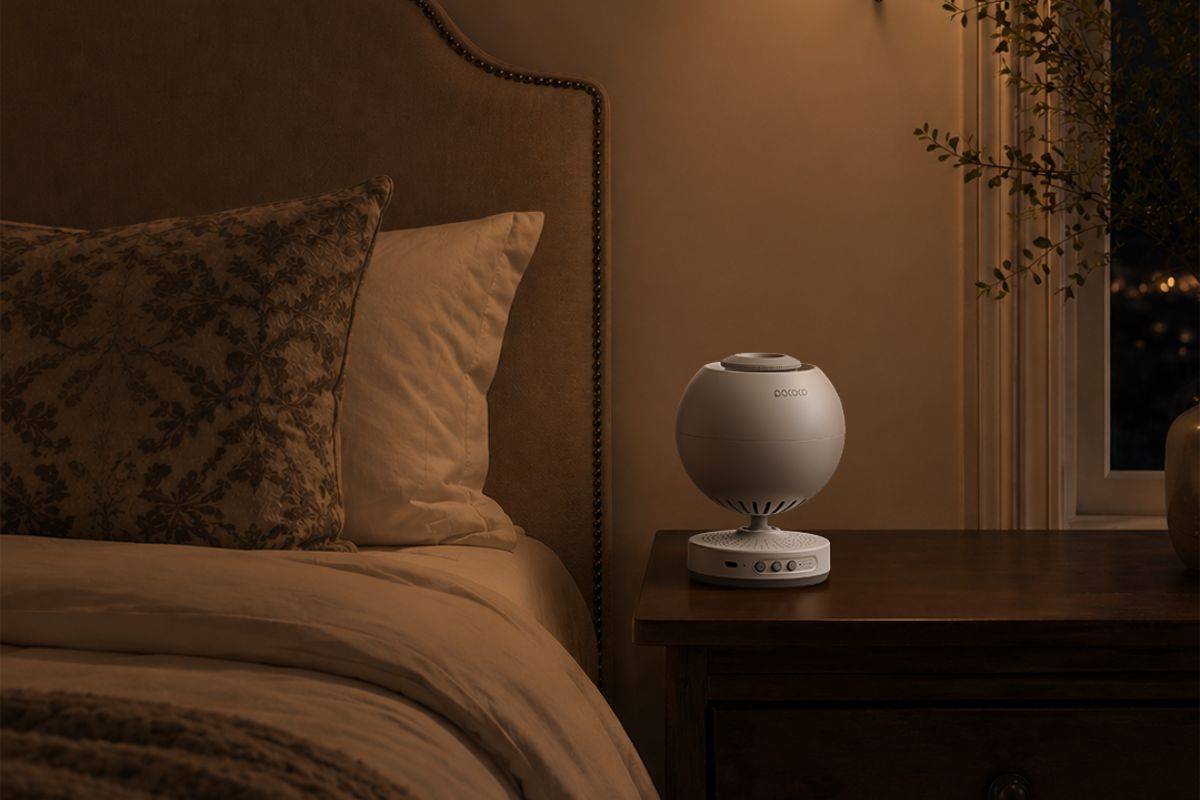
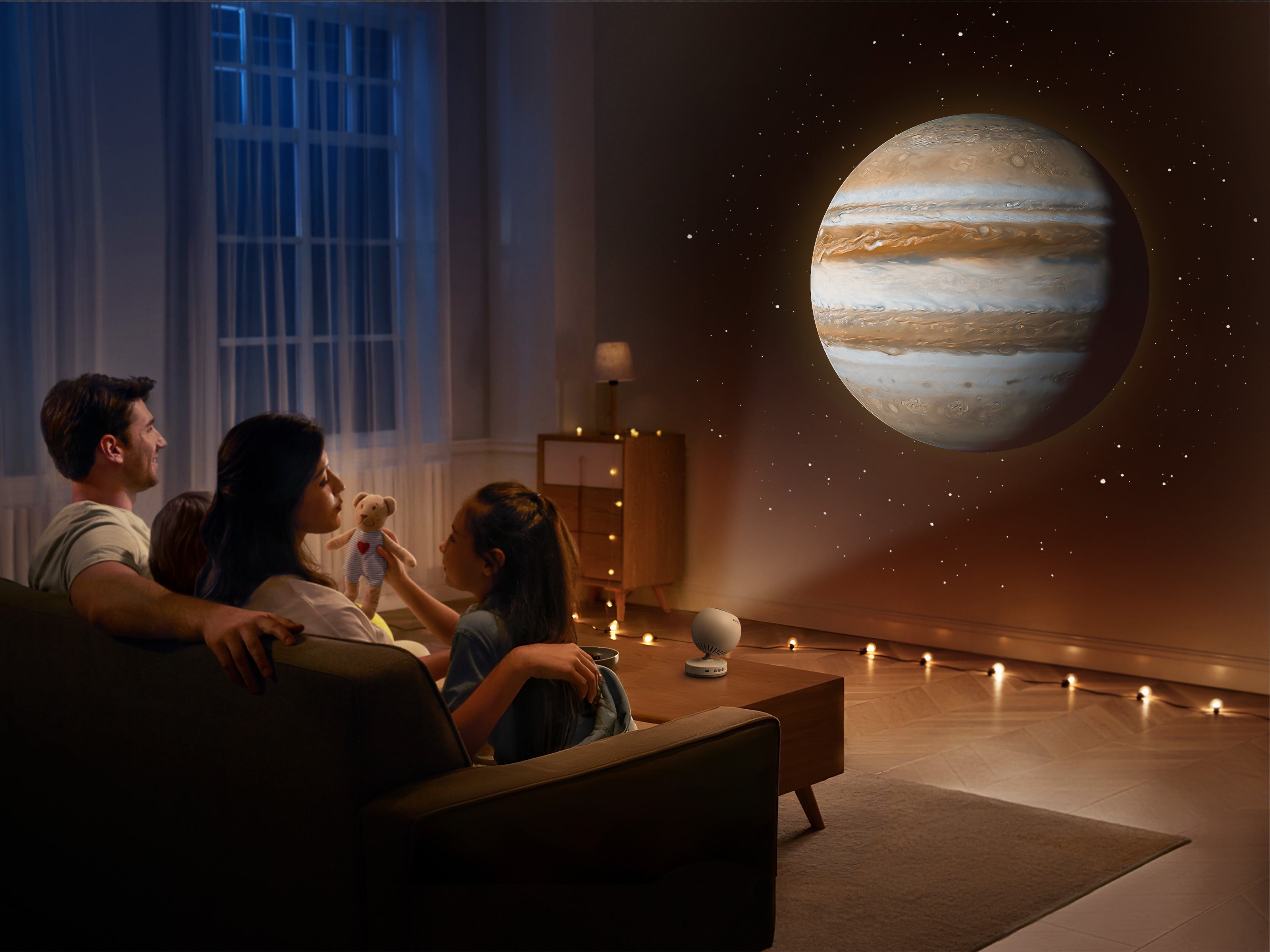
Ambient lighting — warm, low, and non-directional — is the foundation. But beyond the quality of light, there's the quality of the visual atmosphere. A room that feels visually settled and calm is genuinely different from one that's static and bright. Soft, slow movement — the kind that gives your eyes something to rest on without demanding processing — creates a sensory environment that actively supports the transition toward sleep rather than just removing the barriers to it.
This is the difference between a room that happens to be dark and a room that genuinely feels like night.
5. Give Yourself a Consistent Evening Routine
Consistency is what turns individual habits into a signal. When the same sequence of low-stimulation activities happens at roughly the same time each night, the nervous system learns to anticipate sleep — and begins the transition before you've even reached your bed.
The routine doesn't need to be long or elaborate. Twenty to forty minutes of anything calm and predictable is enough. The only non-negotiable is that it happens at a similar time each evening and doesn't include anything that restimulates the stress response. Over a few weeks, the routine itself becomes the cue — and falling asleep starts to feel less like a battle and more like a natural end to the day.
The Best Father's Day Gift Might Be Better Rest
Here's the thing about Father's Day: the dads who are hardest to buy for are usually the ones who genuinely don't want more stuff. They have what they need. What they don't have — what tends to quietly erode over years of being on — is recovery.
A gift that makes the evening easier, the bedroom calmer, or the transition to sleep more reliable isn't frivolous. For someone whose default is to stay switched on until the moment they collapse, it's one of the most useful things in the world.
If you're looking for something that fits this idea — something that changes the atmosphere of a bedroom rather than adding to a pile — the POCOCO Galaxy Projector is worth a look. It transforms any room into a soft, immersive starry environment: calm enough to sleep under, beautiful enough to actually want to spend time in. The kind of thing that quietly improves the end of every day.
Rest well. You've earned it.
Create a Better Evening with POCOCO →
More from the POCOCO Sleep & Wellness series:

Laisser un commentaire
Tous les commentaires sont modérés avant d'être publiés.
Ce site est protégé par hCaptcha, et la Politique de confidentialité et les Conditions de service de hCaptcha s’appliquent.