


Key Takeaways
- The best space-themed gifts do more than entertain — they teach, inspire, and hold a child's attention across years, not just days. Before you buy, it's worth knowing what actually separates a lasting gift from a forgotten one.
- There are great options at every price point — from books and puzzles to telescopes and STEM kits — but they're not all equal when it comes to daily use, educational value, and staying power.
- For kids who genuinely love space, a galaxy projector — specifically the POCOCO — offers something no other gift in this list can: an immersive, educational, and calming experience they'll return to every single night.
If your child has ever pointed at the night sky and asked "What's that star called?" — you already know the feeling. That curiosity is real, it's deep, and it deserves a gift that actually honors it.
Space-obsessed kids are a particular kind of gift-recipient. They don't just want something to play with. They want to explore. They want to understand. They want their bedroom to feel like a launchpad, not just a place to sleep.
This guide is for parents, grandparents, and anyone who wants to get this right. We've pulled together the best Children's Day gift ideas for kids who love space — ranked by how engaging, educational, and genuinely long-lasting each one is. And we'll tell you exactly which one we'd choose first.
Table of Contents
What Makes a Great Space-Themed Gift?
Before we get into the list, it's worth pausing on this question — because the answer shapes everything.
Most space gifts fall into one of two buckets: novelty items that look cool in the moment, and thoughtful gifts that actually do something for a child's development and imagination. The gap between the two is wider than it looks on a product page.
The best space-themed gifts share three qualities:
Educational without feeling like homework. The best gifts feed curiosity naturally. A child learns because they're fascinated, not because they're supposed to. This is the difference between a space book a kid reads voluntarily at midnight and one that sits untouched on the shelf.
Engaging across time. A gift that's exciting on day one but exhausted by day five isn't really a gift — it's a distraction. The best space gifts open into something bigger. There's always more to discover, more to explore, more to come back to.
Long-lasting in the truest sense. This means physically durable, but also emotionally relevant. As children grow, their relationship with the gift should grow too. That's a high bar — but the gifts on this list meet it.
Keep these three criteria in mind as you read. They'll help you cut through the noise and find what's actually right for your child.
1. Space-Themed Books

Books are underrated. A genuinely great space book doesn't feel like reading — it feels like falling into another universe.
For younger children (ages 4–7), look for large-format illustrated books with vivid imagery of planets, moons, and galaxies. The goal at this age is awe first, information second. When a child gasps at a double-page spread of Saturn's rings, that's the spark you're nurturing.
For older kids (ages 8–12), the sweet spot is narrative nonfiction — books that tell the stories behind the science. How did we figure out the universe was expanding? What did it feel like to walk on the moon? What might life on another planet look like? These questions make astronomy personal, not abstract.
For teens, anything written by scientists who are also gifted communicators tends to land well. Space books in this category don't just explain the cosmos — they change how you see your place in it.
Best for: Kids who love reading, quiet evenings, and asking deep questions.
Limitation: A book is a one-time experience. Once read, it doesn't keep giving in the same way an interactive gift does.
2. Space Puzzles

A well-made space puzzle is more than a pastime — it's an extended lesson in patience, spatial thinking, and the scale of the universe.
Galaxy puzzles, in particular, have had a real moment in recent years. The deep purples, electric blues, and scattered star fields make for a visually stunning finished product — the kind of thing kids (and adults) actually want to frame. There's also something genuinely educational about assembling a solar system or a constellation map piece by piece. You absorb the layout differently than you would from a diagram in a textbook.
For a group activity — siblings, family game night, or a rainy afternoon — puzzles are hard to beat. They're collaborative without requiring coordination, and they work at every pace.
Best for: Kids who enjoy focused, hands-on activities; families who like doing things together.
Limitation: Once the puzzle is done, the experience is done. Unless you buy more puzzles, the engagement has a ceiling.
3. Telescope

The idea of giving a child their first telescope is genuinely romantic. Galileo, wandering eyes, the moon up close for the first time. It's a beautiful image.
And sometimes, it delivers exactly that.
But it's worth being honest about the full picture before you commit.
Pros:
- Real-world astronomy — nothing compares to seeing the moon's craters with your own eyes
- Deeply educational and scientifically legitimate
- Can grow into a serious hobby for the right child
- Encourages time outdoors and patience
Cons:
- Requires clear skies — which aren't always available on demand
- Light pollution in cities and suburbs significantly limits what's visible
- Entry-level telescopes can be frustrating to align and focus, especially for young children
- Without guidance, many telescopes end up unused after the first few attempts
A telescope is a great gift for an older child (10+) who already has demonstrated, sustained interest in astronomy and lives somewhere with access to dark skies. For younger kids or families in urban areas, the experience can feel more like struggle than wonder.
Best for: Older, patient, seriously interested kids with access to dark skies.
Limitation: Weather-dependent, location-dependent, and steep learning curve for beginners.
4. STEM Space Kits

STEM space kits — rocket building sets, solar system models, constellation projector kits, coding kits with space themes — sit at a nice intersection of play and learning.
The best ones are project-based. A child works through something, builds something, makes something function. That process teaches problem-solving, cause and effect, and basic engineering logic in a context that feels like fun rather than school. When the rocket model finally holds together, or the motorized planet system actually moves, there's a sense of accomplishment that's hard to replicate.
Age alignment matters a lot here. Many kits are labeled for a broader age range than is realistic — check reviews and look for honest feedback about what age group actually enjoys it.
Best for: Kids who like building, making, and figuring things out.
Limitation: Many kits are one-time projects. Once built, the engagement drops unless the kit has ongoing play value.
5. Planetarium Visits

This one is a little different — it's an experience gift rather than a physical object. And for the right child, it's the most memorable thing on this list.
A planetarium visit takes the abstract — "there are 200 billion stars in the Milky Way" — and makes it visceral. You're lying back in a domed theater while the entire galaxy rotates overhead. For a child who loves space, this can genuinely feel like a religious experience.
Many planetariums also offer programs tailored to different age groups, and some have interactive exhibits that let kids explore beyond the main show.
Best for: Any age; especially powerful for first-time experiences and kids who are more sensory learners.
Limitation: It's a one-day experience. The memory lasts, but the day itself doesn't repeat without another visit — and access depends on geography.
6. Galaxy Projectors

We saved this one for last — not because it's an afterthought, but because it's the most significant item on this list and deserves the space to explain why.
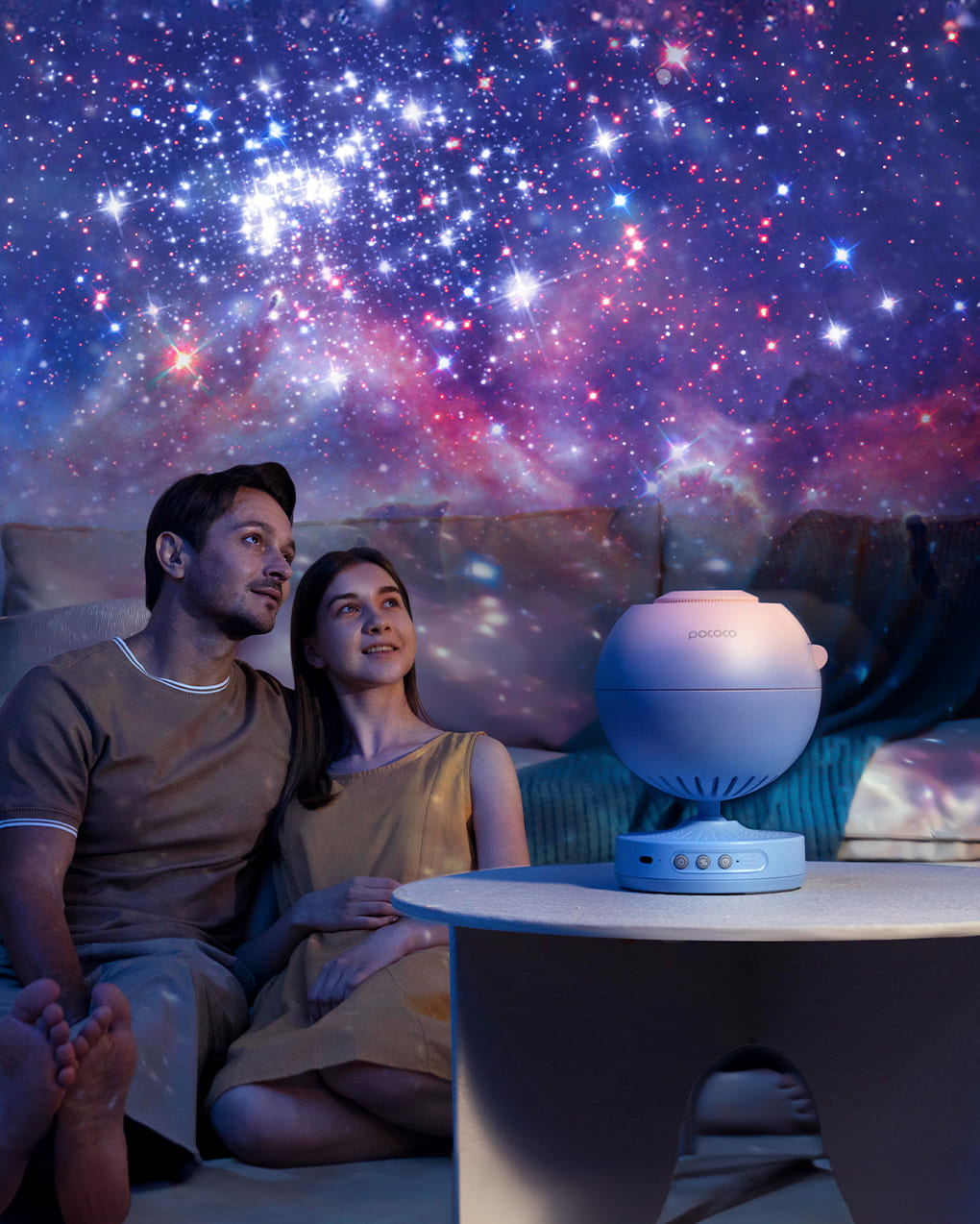
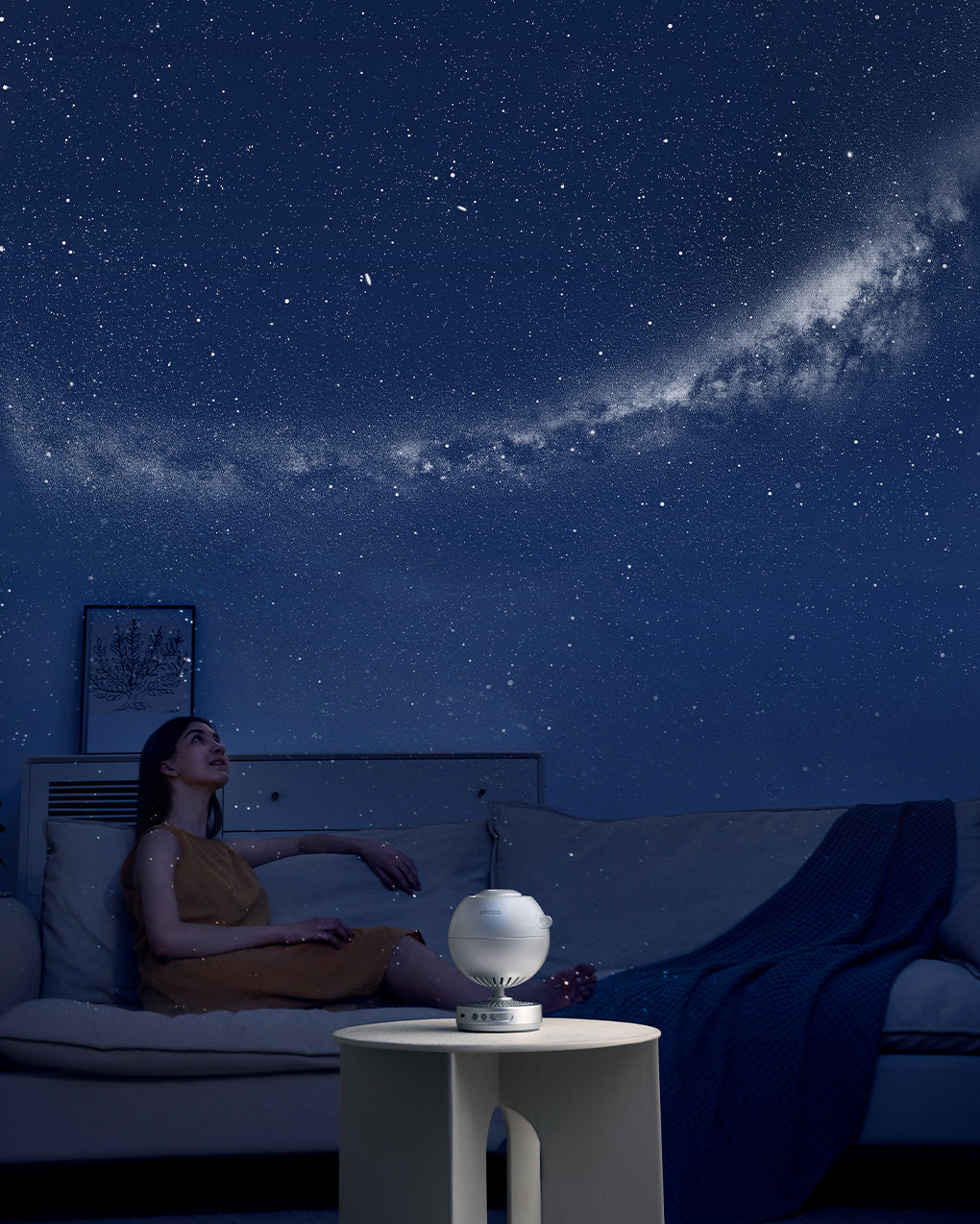
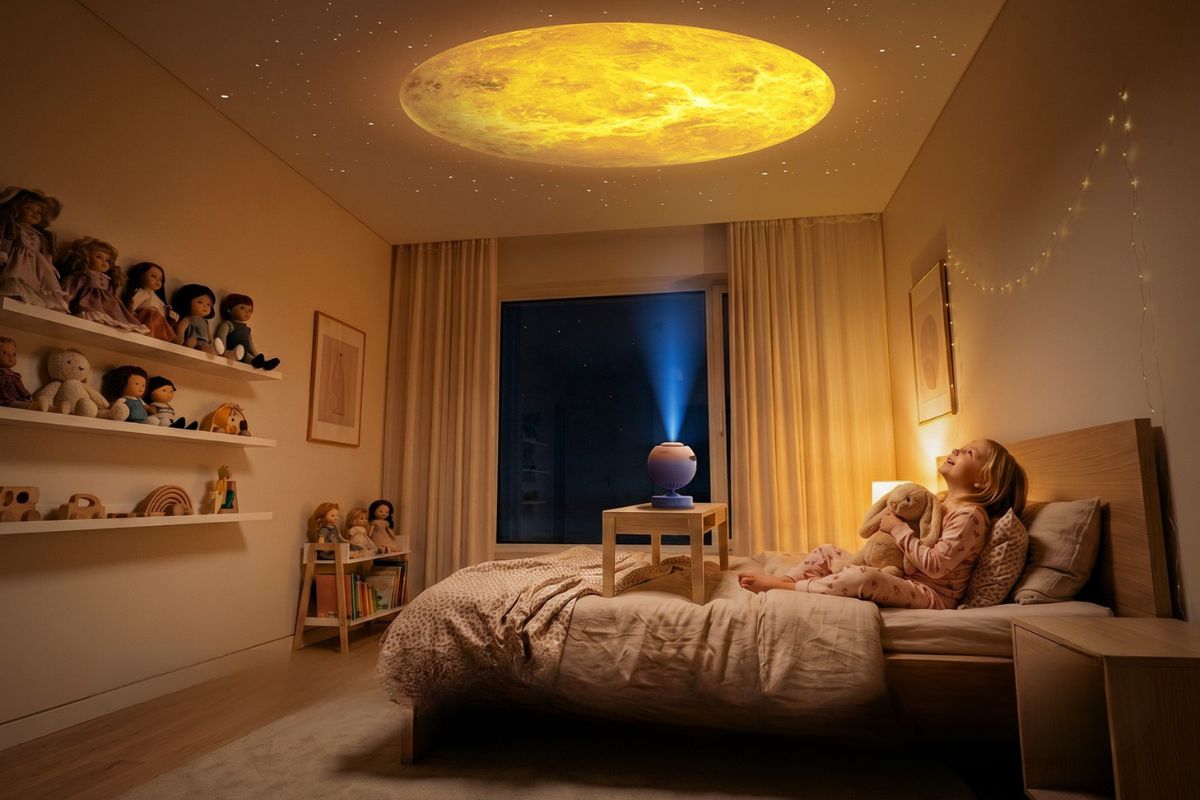
A galaxy projector transforms any room into a personal planetarium. Stars, nebulas, constellations, and aurora effects wash across the ceiling and walls, creating a full-room atmosphere that's genuinely unlike anything else. It doesn't require clear skies. It doesn't need dark countryside. It works every night, in any bedroom, rain or shine.
This is what makes it categorically different from everything else here.
Immersive in a way that's hard to describe until you've seen it. The first time a child turns on a quality galaxy projector and watches the room fill with stars, the reaction is immediate. It's not "oh, cool." It's silence, then wonder. That reaction doesn't fade quickly — because the experience itself is repeatable, but it never feels exactly the same twice.
Educational without any extra effort. A child lying under a projection of the night sky will naturally start asking questions. What constellation is that? How far away is that nebula? Why does that one look different? You don't need to schedule a lesson. The curiosity arises on its own, and that's exactly the kind of learning that sticks. If you want to understand how galaxy projectors compare to other options, our guide on galaxy vs. star vs. planetarium projectors breaks down the differences clearly.
Calming in a way that genuinely matters. The ambient, slow-moving light of a galaxy projector creates a unique atmosphere — visually engaging but not stimulating in the way screens are. It's the difference between a room that winds a child down and one that keeps them buzzing. For kids who struggle with bedtime, this shift in environment can make a real difference. If you've been weighing this against a standard night light, our comparison of galaxy projectors vs. night lights is worth reading.
Long-lasting across ages. A toddler finds it soothing. An eight-year-old uses it to learn constellations. A teenager uses it to decompress after a long day. This is one of the few gifts that genuinely ages with a child rather than getting left behind. For a full breakdown of the best options for different ages, see our roundup of the best star projectors for kids.
Not all galaxy projectors are created equal, though. The market has a lot of cheap, dim, underwhelming options that won't hold a child's interest past the first week. What separates a great galaxy projector from a forgettable one comes down to projection quality, scene variety, and build durability. If you're also curious about aurora-specific effects, our aurora projectors guide covers that territory in depth.
Why We Recommend the POCOCO Galaxy Projector
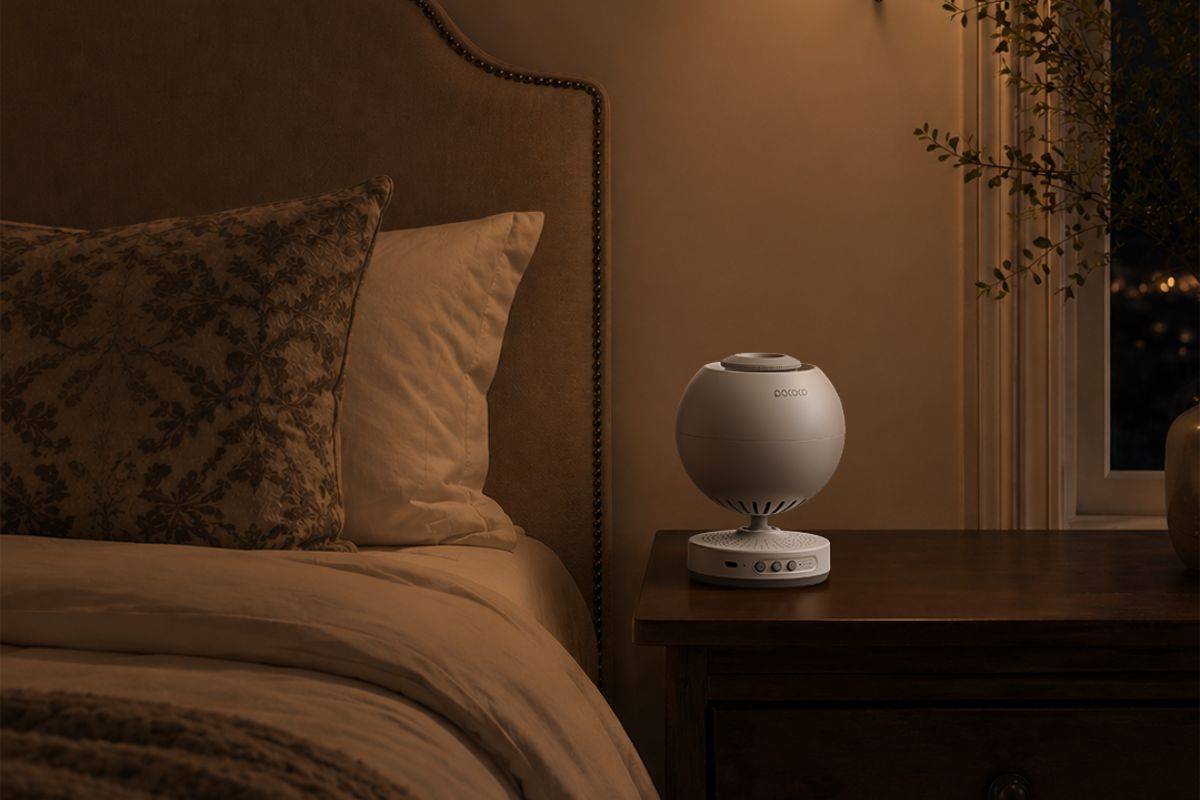
Among everything we've tested and compared, the POCOCO Galaxy Projector stands apart — and the reason comes down to one thing: the disc system.
Most galaxy projectors are fixed. You get one projection, maybe with a rotation setting, and that's what you see every night. It's impressive at first. Then it becomes wallpaper.
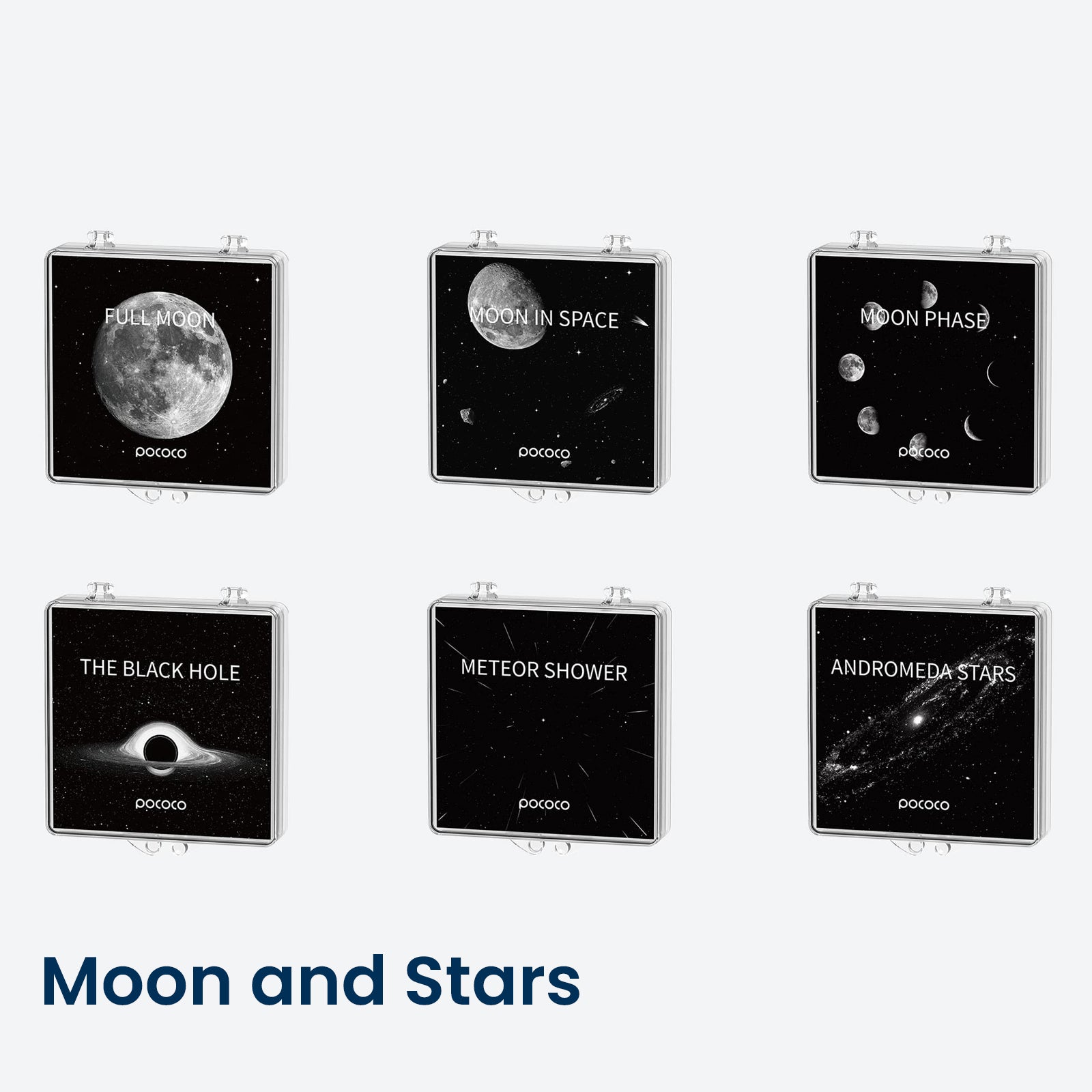
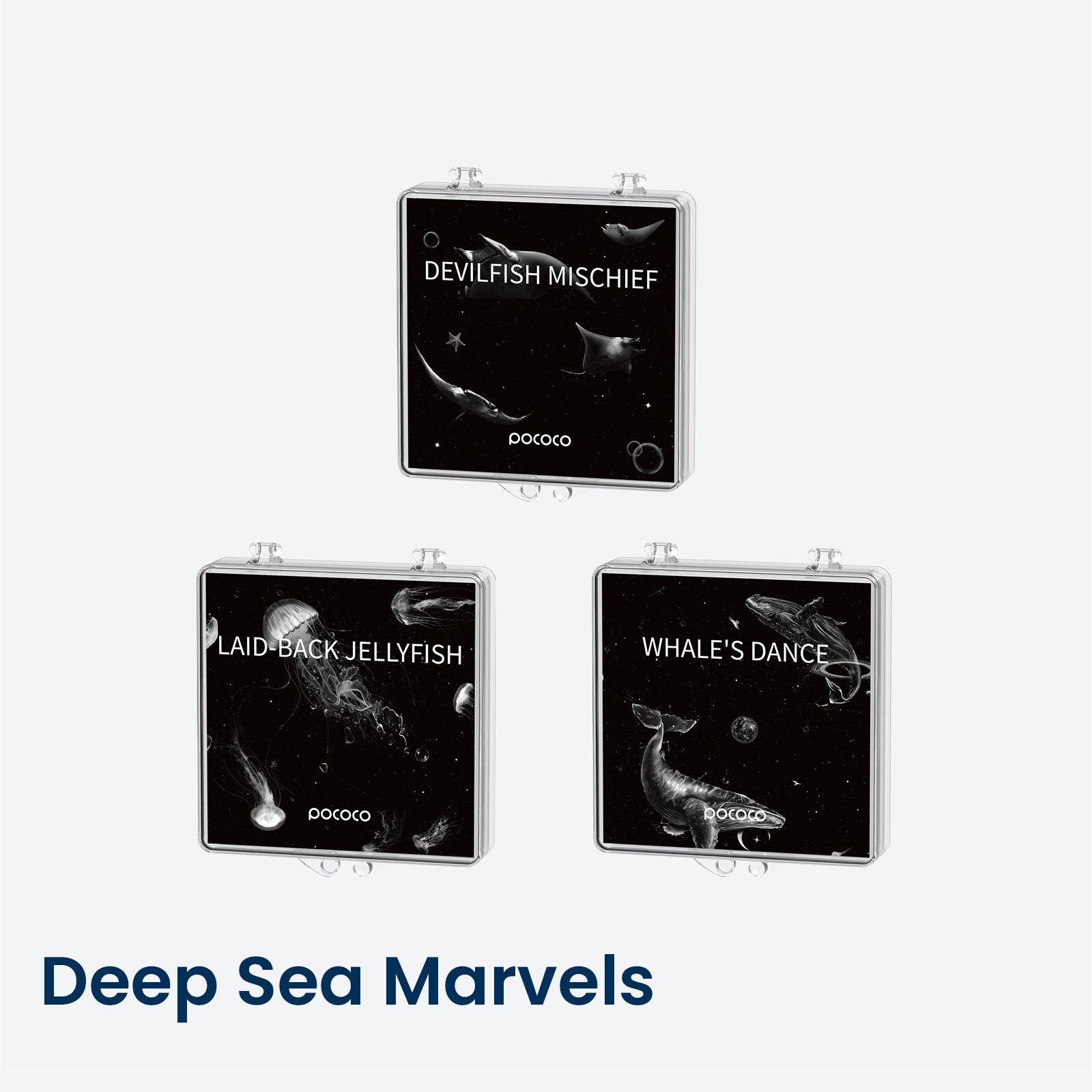
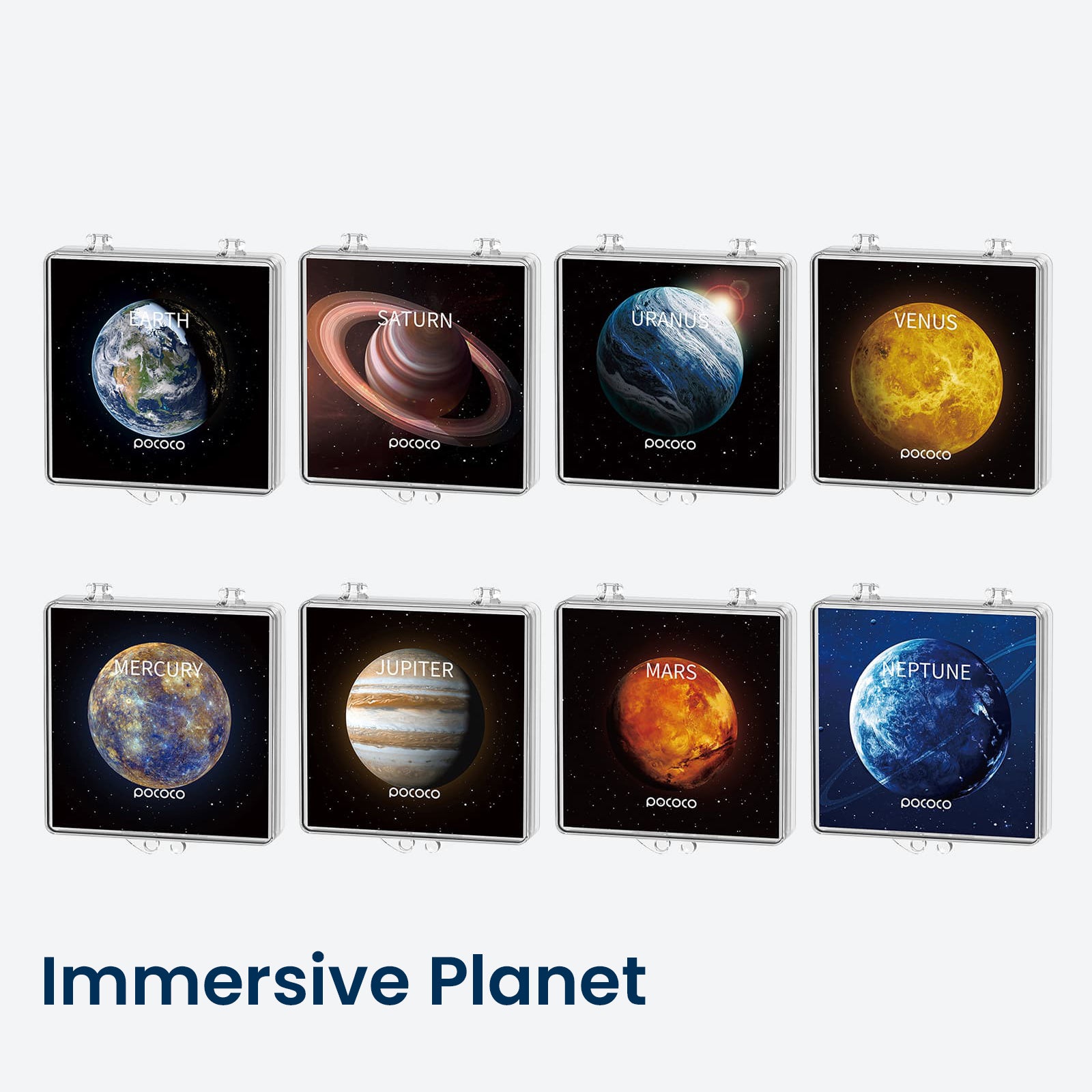
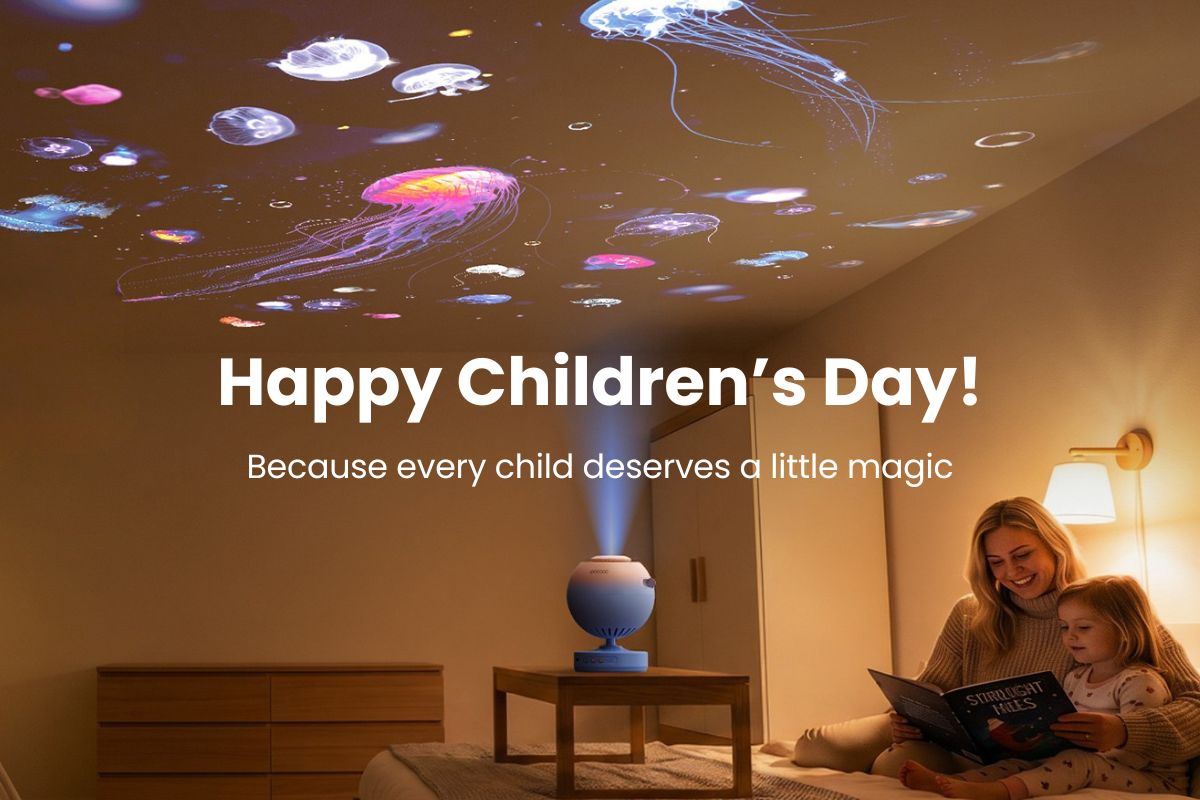
POCOCO works differently. It uses interchangeable glass discs, each one projecting a different scene: deep-sky nebulas, the Milky Way, constellation maps, planets, auroras, ocean imagery, and more. Swapping a disc takes seconds, and the difference in projection is dramatic. The room doesn't just look different — it feels different. This is what makes POCOCO a gift that earns its place for years, not weeks.
The projection quality itself is in a different league from most competitors. Colors are vivid and sharp — the kind of rich blues, purples, and greens that actually look like the images from the James Webb telescope, not a washed-out imitation. The projection covers the full room: ceiling, walls, and even partial floor coverage, creating a genuinely immersive environment.
The light is bright enough to explore and soft enough to sleep under. Many families leave it on as part of their bedtime routine — a low-stimulation wind-down that signals to the child's brain that it's time to rest, not time to engage.
It's also built to last. Unlike cheaper options that fade or malfunction after a few months, POCOCO is made with materials that hold up to daily use. For a gift that will be used every single night, that durability matters.
Kids love it immediately. Parents love what it does for their evenings. And the fact that it keeps evolving — new discs, new scenes, new curiosity — means it never really gets old.
If you're buying one gift for a space-loving child, this is it.

Want to explore more before you decide? These guides will help:

Dejar un comentario
Todos los comentarios se revisan antes de su publicación.
Este sitio está protegido por hCaptcha y se aplican la Política de privacidad de hCaptcha y los Términos del servicio.