






Key Takeaways
- ADHD sleep struggles aren't a discipline problem — they're a brain wiring problem.
- By nighttime, an ADHD brain is often carrying a full day's worth of unprocessed stimulation — and the bedroom environment usually makes it worse.
- Soft, slow-moving light gives an overstimulated brain somewhere low-demand to land — and over time, becomes a cue it learns to trust.
If you have ADHD, you already know the feeling. It's late. You're genuinely tired. But the moment you lie down, your brain shifts into a different gear — thoughts accelerating, the day replaying, your body restless in a way that has nothing to do with caffeine or willpower.
This isn't a failure of routine. It isn't something you can fix by trying harder to relax. ADHD and sleep have a complicated relationship — and understanding what's actually happening at night is the first step toward changing it.
Why ADHD Minds Struggle at Night
Do people with ADHD have trouble sleeping? More often than most people realize. Research consistently shows that ADHD sleep onset insomnia — the inability to fall asleep even when exhausted — is one of the most common and least discussed parts of living with ADHD. Some estimates suggest that up to 70% of adults with ADHD experience chronic sleep difficulties.
The reason isn't simply that ADHD brains are "too busy." It goes deeper than that. ADHD involves differences in dopamine regulation — the same neurotransmitter that controls attention, motivation, and reward. At night, when external stimulation drops away, the brain doesn't naturally downshift. Instead, it goes looking for something to engage with. Thoughts spiral. Memories surface. The to-do list for tomorrow suddenly feels urgent. The brain, deprived of its daytime inputs, starts generating its own.
This is what ADHD sleep deprivation often looks like in practice: not the inability to feel tired, but the inability to convert tiredness into actual sleep. The body is ready. The brain isn't done yet.
The Hidden Problem — Nighttime Overstimulation
There's something that doesn't get talked about enough in conversations about ADHD and sleep: what happens to all the stimulation that accumulates during the day.
ADHD brains are often more sensitive to sensory input — sounds, light, texture, social interactions, screen time. Throughout the day, that input builds up. And by the time evening arrives, the nervous system is carrying a kind of overstimulation hangover. The world has quieted down, but the internal noise hasn't.
This is why overstimulated ADHD often peaks at night, not during the busiest part of the day. The buffer is gone. There's no new task to redirect toward, no conversation to follow, no meeting to prepare for. Just the accumulated weight of the day — and a brain that doesn't know how to set it down.
Add a bright overhead light, a cluttered bedroom, a TV in the background, or a phone within reach, and the environment is actively making things worse. Every additional input is one more thing an already-overwhelmed system has to process. Sleep doesn't stand a chance.
What an ADHD-Friendly Bedroom Actually Looks Like
The phrase "calming ADHD bedroom" gets thrown around a lot, but what does it actually mean in practice? It doesn't mean a minimalist space that feels cold or empty. It means a room that reduces the number of decisions, inputs, and visual demands your brain has to manage — so it can finally stop working.
ADHD bedroom organization matters more at night than during the day. Visual clutter isn't just an aesthetic problem — for an ADHD brain, every out-of-place object is a potential attention hook. A pile of laundry, an open laptop, a stack of books — each one registers as unfinished business. The brain notes it, flags it, and stays just alert enough to keep it on the list. Clearing visual lines of sight before bed isn't tidiness for its own sake. It's reducing the cognitive load your brain has to carry into sleep.
But here's something counterintuitive: complete silence and total darkness don't always help either. Without any input at all, an ADHD brain tends to fill the space itself — and what it generates is rarely restful. What works better is low-stimulation input: something present enough that the brain doesn't go searching, but quiet enough that it doesn't demand processing.
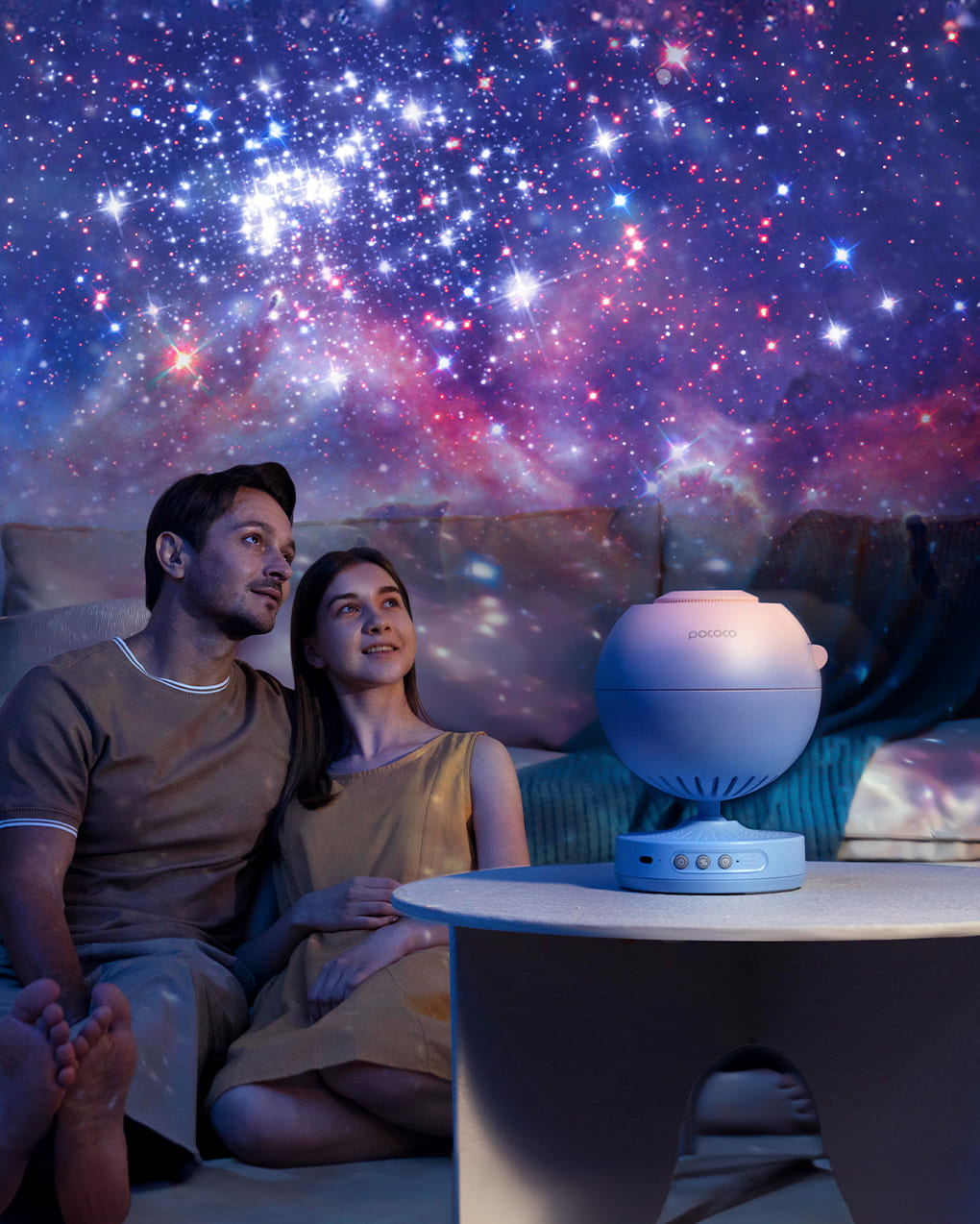
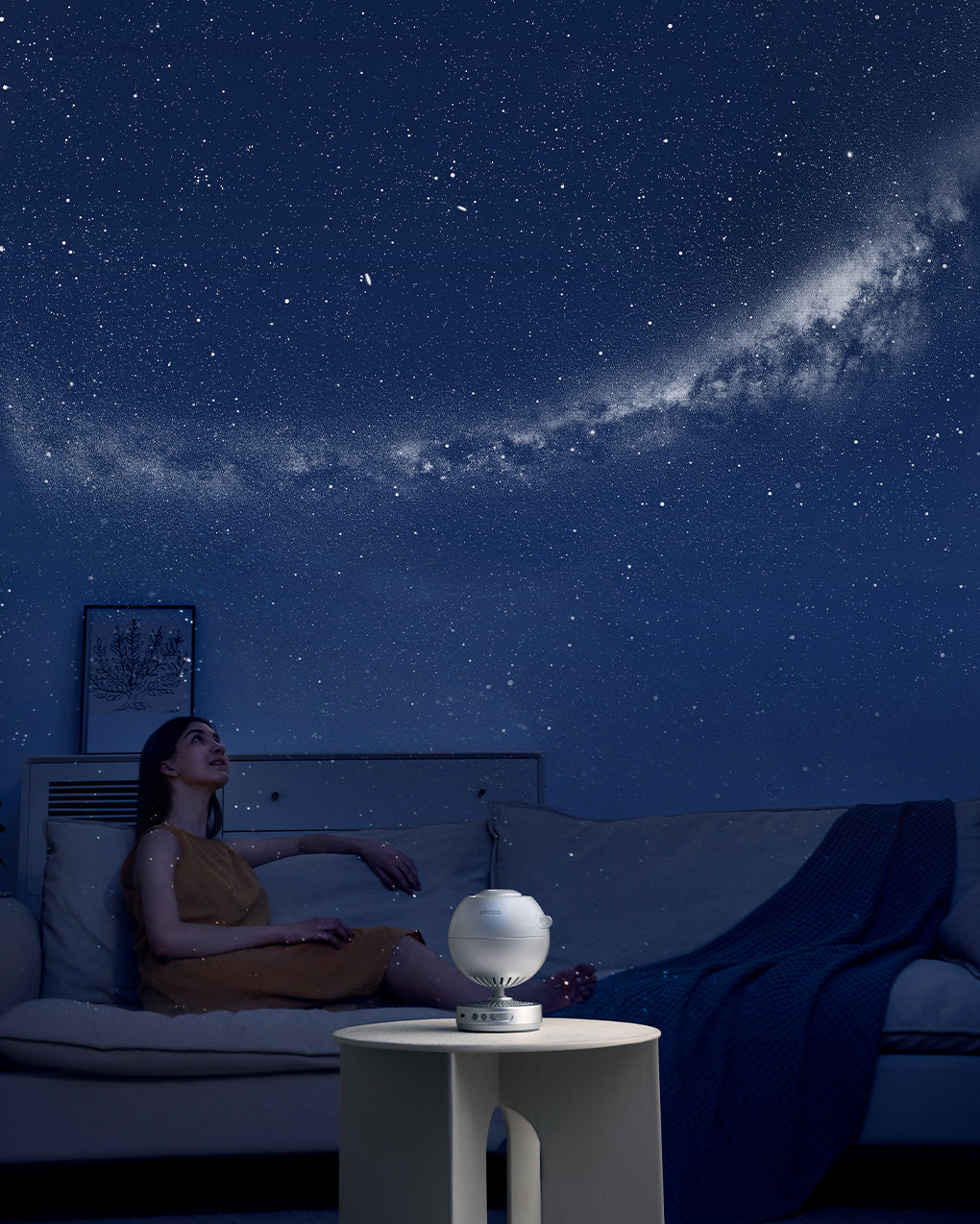
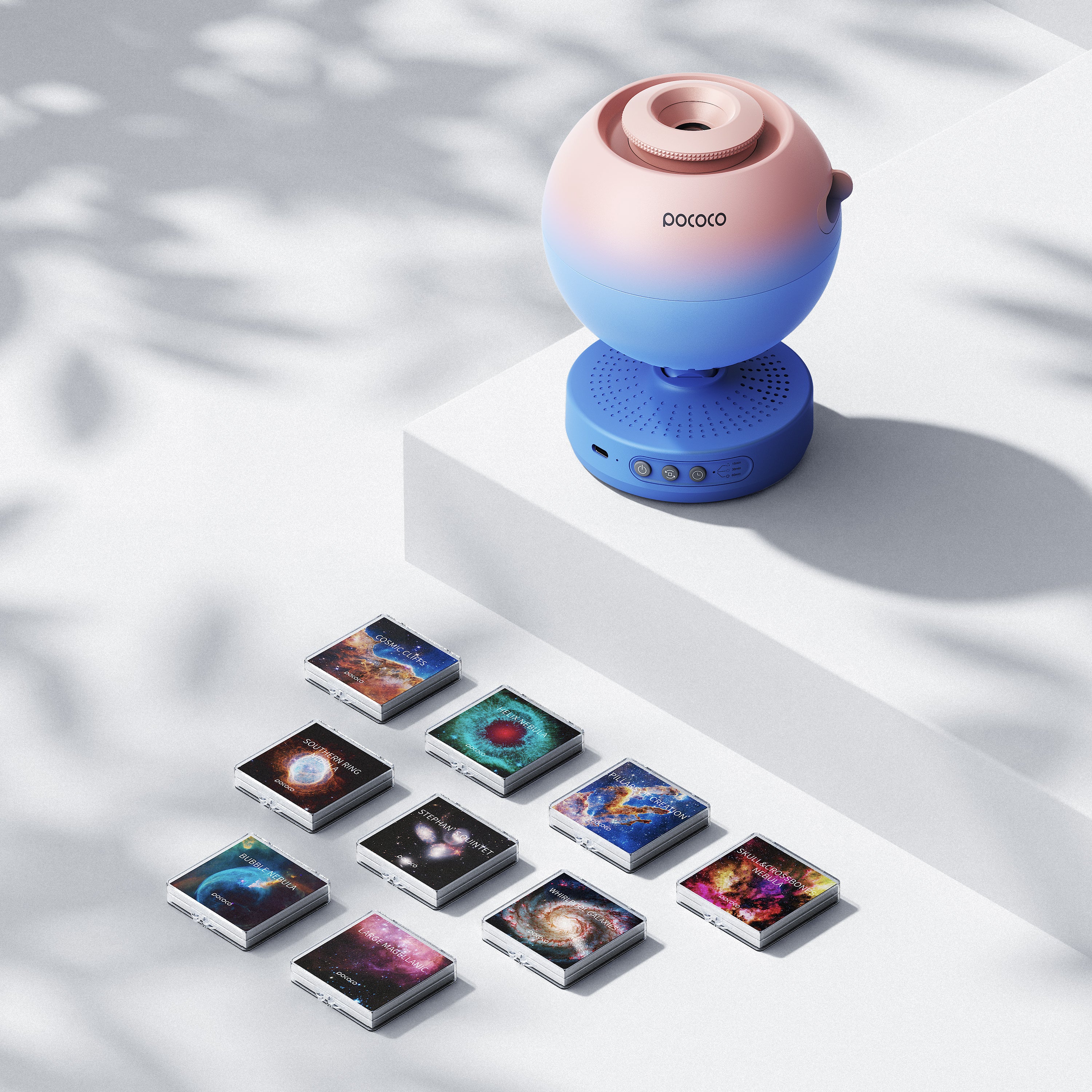
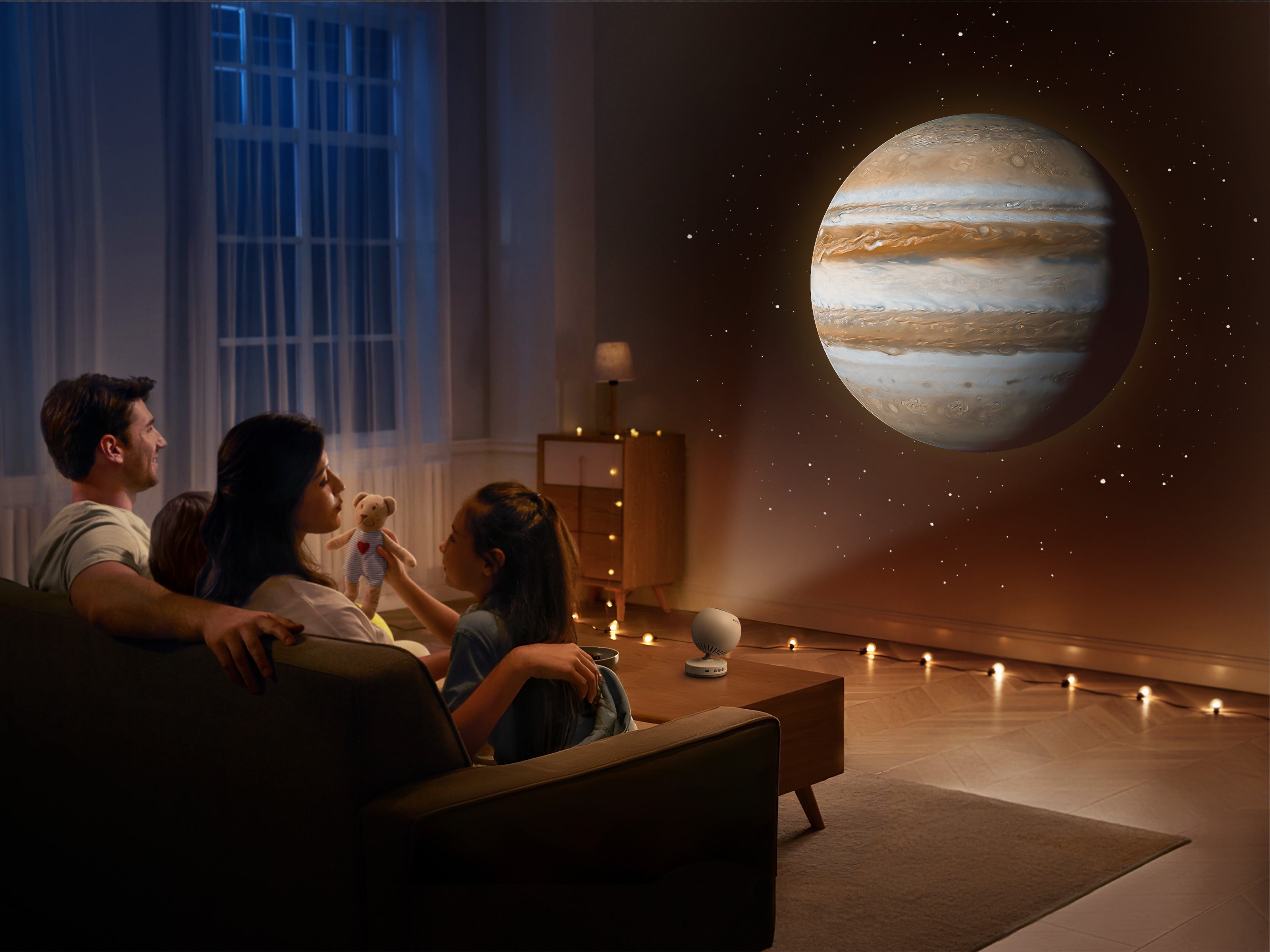
This is where calming sensory lights become genuinely useful — not as mood décor, but as a functional tool. Slow movement. Predictable patterns. Warm, dim color that doesn't trigger alertness. The visual system has somewhere gentle to land, and the brain gradually stops bracing for the next thing. A POCOCO galaxy projector works exactly this way — the slowly drifting star fields give the brain a soft visual anchor, something to follow without effort. Over time, it becomes a transition signal the brain learns to trust: when the projection comes on, it's allowed to slow down.
Simple Ways to Create a Calmer Night Environment
You don't need to overhaul your bedroom or build a rigid new routine. The goal is simpler: reduce stimulation gradually, so the environment starts doing some of the work for you.
Dim the lighting early. Start lowering light levels at least an hour before you want to sleep. Bright overhead lights keep the brain in daytime mode. Switching to warm, low-level light is one of the fastest ways to begin shifting your nervous system's expectations for the evening.
Reduce visual stimulation before bed. Put away anything that reads as "unfinished" — close the laptop, turn the phone face-down, clear the immediate surfaces around your bed. You're not cleaning. You're removing attention hooks.
Give your brain a visual grounding point. Instead of lying in darkness with your thoughts, introduce something slow and soft to focus on. Calming sensory lights — especially those with gentle, drifting movement — provide just enough input to keep the brain from generating its own, without adding stimulation that delays sleep.
Keep it consistent. ADHD brains respond well to environmental patterns, even when they resist routine. If the same sequence of dim light and soft visuals happens each night, your brain starts to recognize it. The transition into sleep begins to feel less like a battle and more like something the room is helping you do.
FAQ
Do people with ADHD need more sleep?
Not necessarily more — but higher quality. ADHD sleep deprivation is less about total hours and more about the difficulty reaching and sustaining deep, restorative sleep. Many people with ADHD feel chronically unrested even after a full night in bed, because the brain never fully settled during the night.
Why do ADHD brains struggle to fall asleep?
ADHD sleep onset insomnia is closely tied to dopamine regulation and attention patterns. Without external stimulation to direct focus, the ADHD brain tends to self-generate input — racing thoughts, memory loops, sudden bursts of ideas. The brain isn't being difficult. It's doing what it's wired to do. The challenge is giving it a quieter alternative.
What helps ADHD overstimulation at night?
Reducing environmental stimulation is the most direct approach — dimmer lighting, less visual clutter, fewer competing inputs. Alongside that, introducing something low-demand for the brain to rest on — like slow-moving sensory lights — can help ease the transition from an overstimulated state into something closer to calm. The goal isn't to force the brain to stop. It's to give it somewhere softer to go.
Are sensory lights helpful for ADHD sleep?
For many people, yes. The right kind of sensory lighting — warm, dim, with slow and predictable movement — provides just enough gentle visual input to keep an ADHD brain from spiraling into its own thoughts, without adding the kind of stimulation that keeps you awake. A galaxy projector like POCOCO is specifically well-suited for this: the slowly drifting light patterns are soft enough to be non-stimulating, consistent enough to feel grounding, and predictable enough to become a bedtime cue the brain starts to recognize over time.
A Brain That's Wired Differently Deserves a Room That Understands That
ADHD sleep struggles aren't a personal failing. They're what happens when a brain that's wired for stimulation gets put in an environment that doesn't account for that — and told to simply switch off.
The answer isn't more discipline or a stricter bedtime. It's a bedroom that works with how your brain actually functions at night. Softer light. Fewer visual demands. A gentle, consistent signal that the day is over and nothing is required of you anymore.
POCOCO's galaxy projectors were designed to create exactly that kind of environment — slow, warm, quietly present. Not something to watch. Just something to let your brain rest against.


Dejar un comentario
Todos los comentarios se revisan antes de su publicación.
Este sitio está protegido por hCaptcha y se aplican la Política de privacidad de hCaptcha y los Términos del servicio.