







Key Takeaways
- Struggling to fall asleep as the days get longer isn't a discipline problem — it's a biology problem. Extended daylight delays your body's natural melatonin release, quietly pushing your internal clock later.
- Resetting your sleep schedule doesn't require a dramatic overhaul. A consistent wake time and a few deliberate evening habits can shift your circadian rhythm back within one to two weeks.
- Most sleep advice focuses on what to avoid before bed. What gets overlooked is what your environment actively communicates — and that's often where the real problem lives.
Have you noticed yourself staying up later than usual lately?
It starts subtly. The sun is still up at 8pm, so you don't feel the pull toward sleep you normally would. You stay up an hour longer than intended. Then another. Before long, you're lying awake past midnight — exhausted but wired, wondering why your body won't cooperate.
This isn't a lack of willpower. It's often a direct response to changing light cues. And once you understand what's driving it, the fix becomes much more straightforward.
Table of Contents
Why Longer Days Can Disrupt Your Sleep Schedule
Your body doesn't know what time it is by reading a clock. It knows by reading light.
The key mechanism is melatonin — the hormone your brain releases to create the biological drift toward drowsiness. Under normal conditions, melatonin production begins roughly two hours before your natural sleep time. But it's suppressed by light, particularly the blue-wavelength light in daylight and most screens.
In summer, longer days mean your eyes are receiving light signals for more hours each day — pushing melatonin release later and later into the evening. The "darkness cue" your brain needs to start winding down simply arrives later than it did in winter. You're not staying up by choice. Your biology is following the light.
The good news: because light caused the problem, light — used differently — can fix it.
Signs Your Sleep Schedule Needs a Reset
Sleep schedule drift happens gradually, which is why most people don't notice until they're already significantly off track. Three signs worth taking seriously:
You can't fall asleep even when you're tired. If you're lying in bed exhausted but unable to switch off, your brain likely hasn't received the night signals it needs to transition into sleep mode. Tiredness and biological sleep-readiness aren't the same thing.
You wake up feeling unrefreshed. Low-quality sleep — the kind that leaves you groggy regardless of hours — often points to circadian misalignment. Your body is sleeping at the wrong point in its natural cycle.
You sleep significantly longer on weekends. Regularly sleeping two or more hours later on weekends is a sign that your schedule and your biology aren't aligned during the week. It's sometimes called "social jet lag" — and it compounds over time.
5 Ways to Reset Your Sleep Schedule
These strategies work with your circadian biology, not against it. Consistency matters more than intensity here — small changes applied daily outperform dramatic ones applied occasionally.
1. Wake Up at the Same Time Every Day
Your wake time is the anchor of your circadian rhythm. A consistent morning signal gives your internal clock a reliable reference point — and your body gradually aligns everything else to it, including when you feel sleepy at night. This works better than trying to force an earlier bedtime, which usually just means lying awake longer.
Choose a time you can hold seven days a week, including weekends, and stick to it for at least two weeks.
2. Get More Morning Sunlight
Natural daylight in the first hour after waking is the most powerful tool for resetting a circadian rhythm that has drifted late. It tells your brain clearly: this is when day begins — which also sets the clock for when night should begin, roughly 16 hours later. Even 10–15 minutes outside, or near a bright window, makes a measurable difference when done consistently.
3. Reduce Bright Light at Night
In the two hours before bed, bright and blue-spectrum light suppresses melatonin and signals to your brain that it's still daytime. Dimming your overhead lights and shifting to warmer, lower light sources — amber-toned bulbs, lamps instead of overheads — has a real effect on how quickly your brain begins its transition toward sleep. This isn't about sitting in darkness. It's about sending the right signal at the right time.
For a deeper look at how your bedroom environment interacts with sleep quality, our guide to building a better sleep environment during long summer days covers this in detail.
4. Create Better Night Signals
Your brain is pattern-recognition hardware. It learns, over time, to associate specific sensory inputs with specific states — and it starts preparing for sleep before you even lie down, if the cues are right.
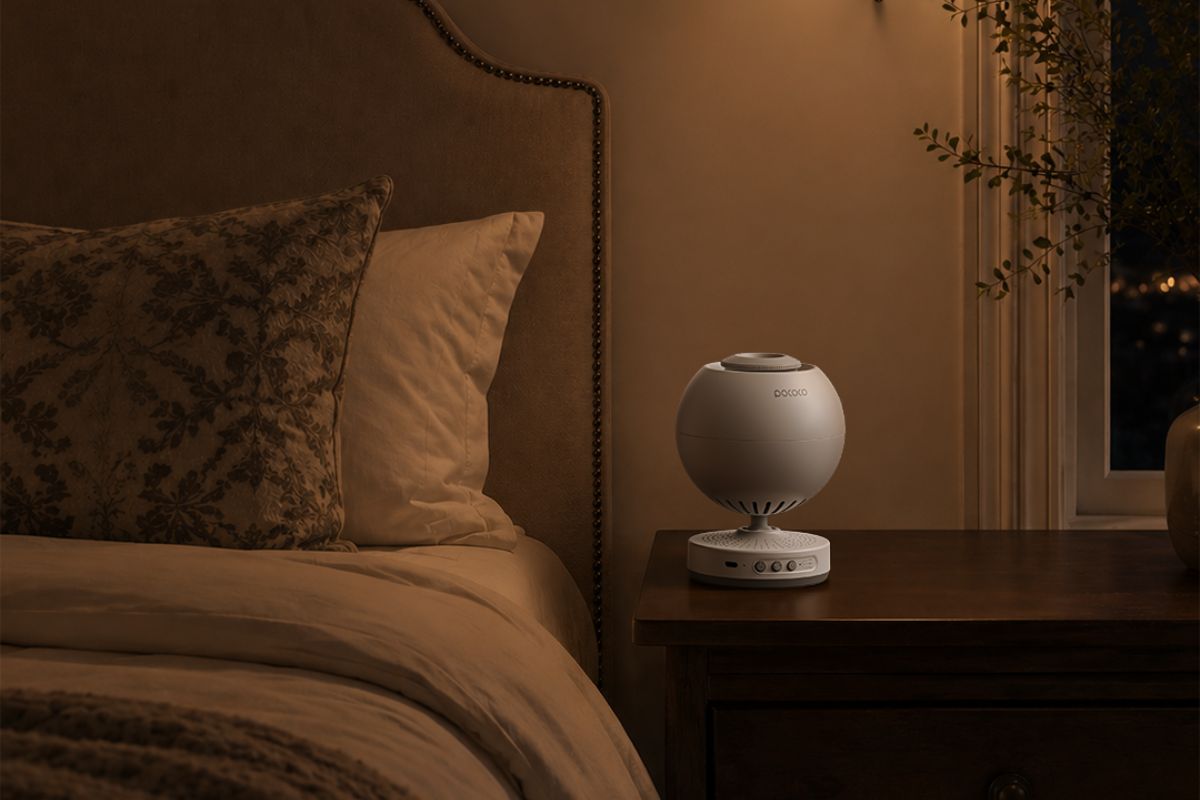
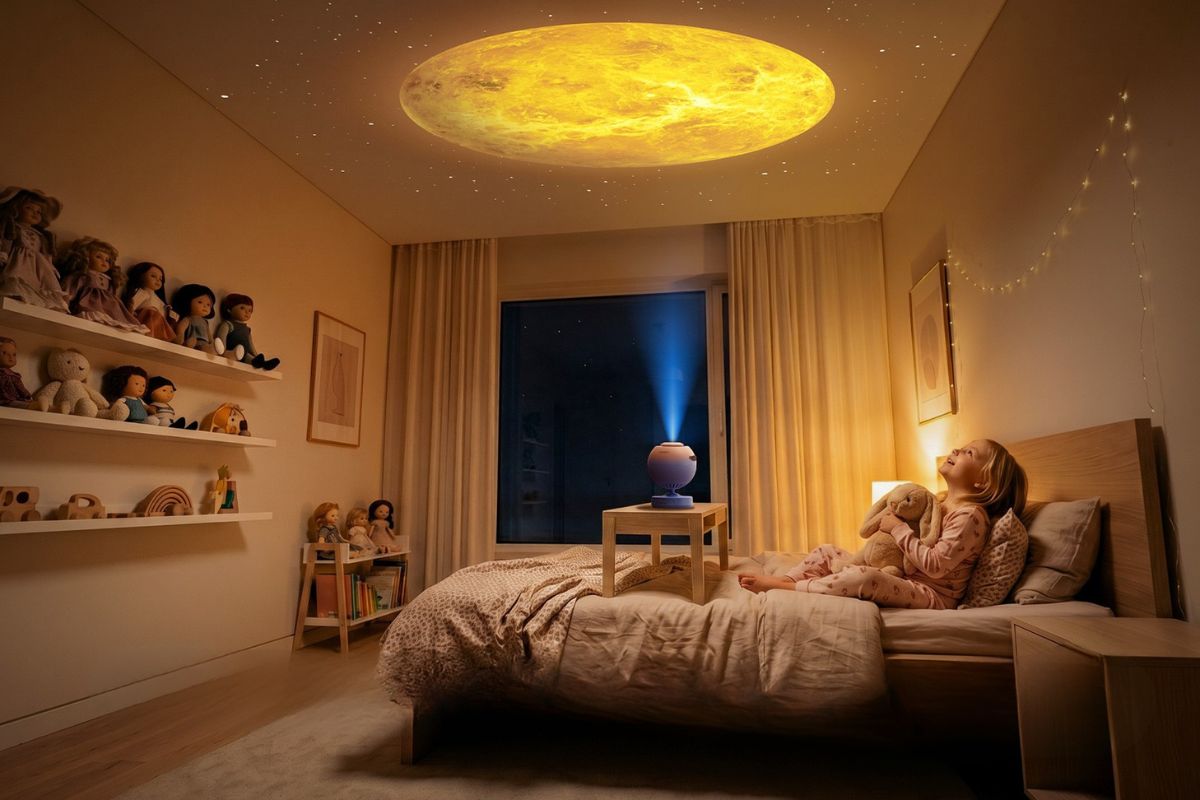
These night signals can include anything calm, low-stimulation, and consistent. Warm lighting is the foundation. Beyond that, think about the visual atmosphere of your room in the final hour before bed. A space that feels soft and settled sends different signals than one that's static and bright. Gentle, slow visual movement — the kind that gives your eyes something to rest on without demanding mental engagement — is one of the most underrated sleep cues most people never think to create. For more on how this works in practice, 5 ways a star projector can improve your night routine is a good place to start.
5. Build a Consistent Wind-Down Routine
A wind-down routine is a behavioral form of night signaling. When you do the same sequence of calming activities at roughly the same time each evening, your nervous system learns the pattern — and begins the transition toward sleep before you've even reached your bed. Reading, light stretching, breathing exercises, or calm music all work. The specific activity matters less than the consistency and the absence of screens. Thirty to forty-five minutes is usually enough.
Why Your Sleep Environment Matters More Than You Think
Most sleep advice focuses on behavior — what you do, what you avoid, when you wake up. That all matters. But there's a parallel factor that rarely gets enough attention: what your environment is actively communicating while you're trying to sleep.
Your brain doesn't stop reading sensory input when you lie down. It keeps monitoring light levels, movement, and visual input to decide whether it's safe to descend into deep sleep. An environment sending the wrong signals keeps your nervous system subtly activated — even when you're exhausted — making sleep feel shallow or frustratingly out of reach.
A bedroom that supports sleep isn't just dark and quiet. It actively communicates safety and night — through warm light, a calm visual field, and an atmosphere that feels settled rather than stimulating. The habits you build matter. But the environment either reinforces them or quietly undermines them.
If you've made the behavioral changes and sleep still feels harder than it should, the environment is usually where the remaining friction lives. Our article on whether your sleep environment is keeping your nervous system awake at night goes into this in depth — and is worth reading alongside this one.
Frequently Asked Questions
How long does it take to reset a sleep schedule?
Usually between a few days and two weeks, depending on how far the schedule has drifted and how consistently you apply the reset strategies. The most important variable is wake time consistency — that single anchor tends to pull everything else into alignment faster than any other change.
Can longer daylight hours really affect sleep?
Yes. Extended daylight delays melatonin release by keeping your eyes exposed to light-suppressing signals for longer each day. Even if you're indoors in the evening, ambient light through windows still registers. This is why summer sleep disruption is common even among people whose habits haven't changed — the environment shifted, and their biology followed.
What's the fastest way to fix a sleep schedule?
Set a fixed wake time and hold it every day, including weekends. This consistently outperforms trying to force an earlier bedtime, which usually just means more time lying awake. Pair it with morning sunlight exposure and reduced evening light, and most people see a noticeable shift within a week.
Does bedroom lighting affect sleep quality?
More than most people realize. Bright, cool-spectrum light — from overhead LEDs, screens, or fluorescent bulbs — suppresses melatonin and keeps the nervous system in an alert state. Switching to warm, dim lighting in the 60–90 minutes before bed creates a different kind of environment: one your brain reads as night rather than day. The softer and more settled the visual atmosphere, the easier the transition tends to be.
Your sleep schedule can shift back. It just needs the right signals — starting with the environment you sleep in.
Create Your Night Signals with POCOCO →
More from the POCOCO Sleep & Wellness series:


Zostaw komentarz
Wszystkie komentarze są moderowane przed opublikowaniem.
Ta strona jest chroniona przez hCaptcha i obowiązują na niej Polityka prywatności i Warunki korzystania z usługi serwisu hCaptcha.