







Key Takeaways
- ADHD bedrooms can feel overwhelming not because they're messy, but because they're busy — too much visual and sensory input for the brain to filter at once.
- A calming bedroom isn't an empty one. It's an intentional one, where less visual clutter and softer lighting help a room feel less like it's demanding attention.
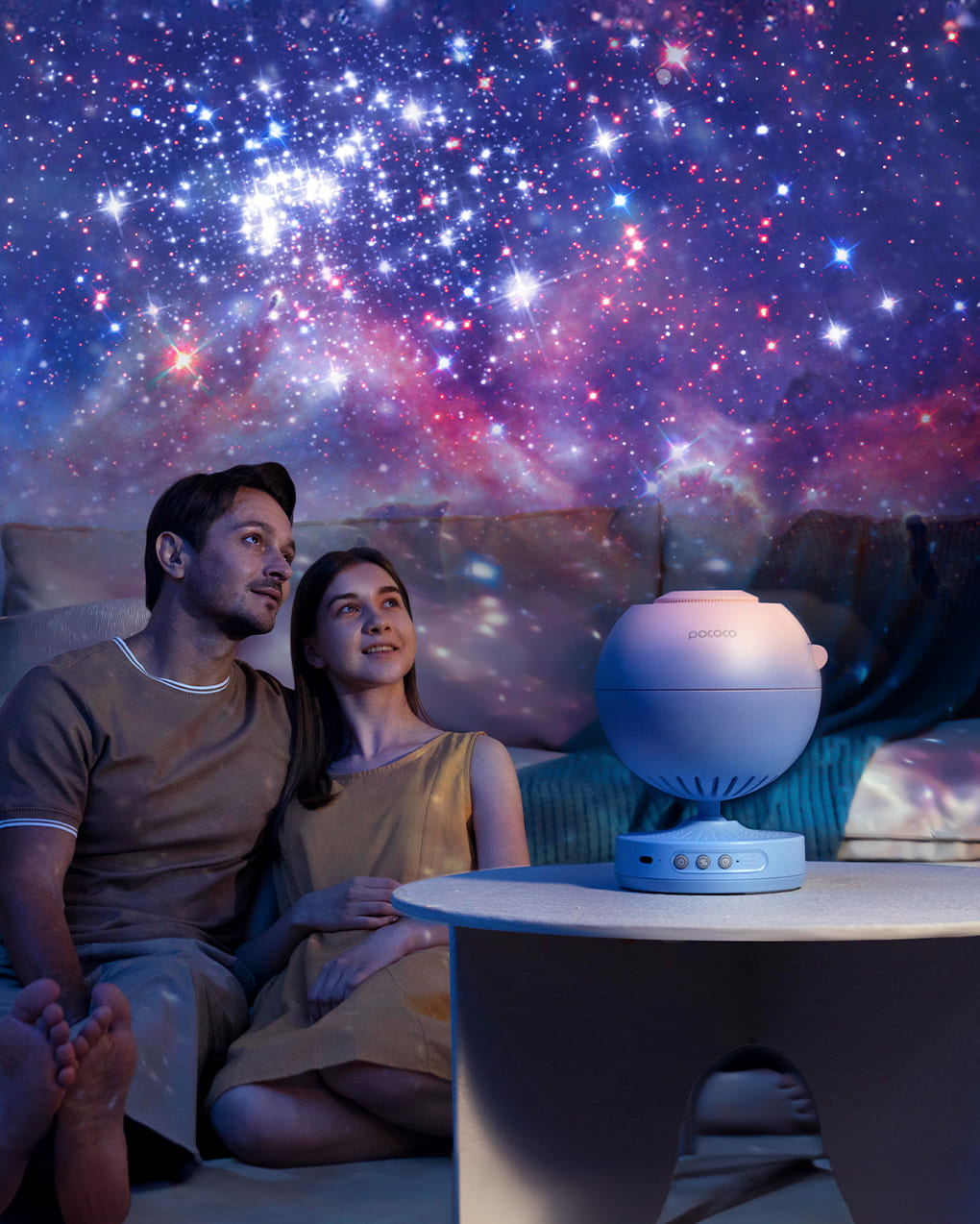
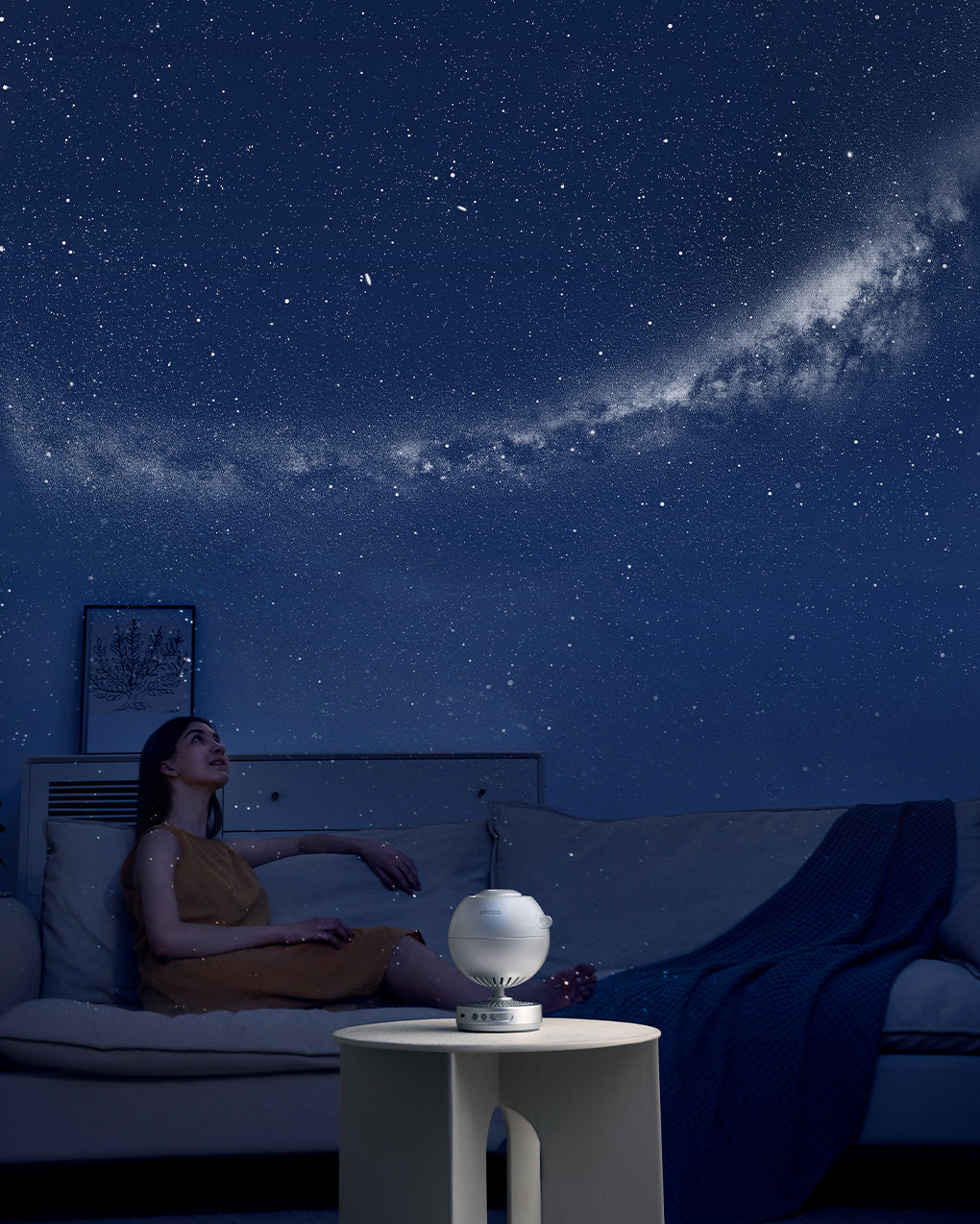
- A galaxy projector is one simple way to bring soft, sensory-friendly light into a bedroom — gentle and immersive rather than bright and unpredictable.
Some bedrooms feel relaxing the moment you walk in. Others feel like they're constantly asking for your attention — too many objects, too much light, too many small reminders of things left unfinished.
For ADHD minds, this isn't really about mess. It's about how much the room asks the brain to process at once, and a few intentional changes to the space can make it noticeably easier to unwind.
Table of Contents
- Why Bedrooms Can Feel Overwhelming for ADHD Minds
- What Makes an ADHD-Friendly Bedroom?
- How Sensory Lighting Can Create a More Calming Bedroom
- Simple ADHD Bedroom Reset Checklist
- FAQ
Why Bedrooms Can Feel Overwhelming for ADHD Minds
It's rarely about how a room looks on the surface. A bedroom can be tidy, even beautifully decorated, and still feel exhausting to be in.
For an ADHD brain, the issue often isn't aesthetics. It's volume — how much visual and sensory information a room is putting out at once. More input means more to filter, and filtering takes energy the brain doesn't always have to spare.
Visual Clutter Creates Constant Mental Reminders
A pile of clothes on the chair isn't just clothes. It's a quiet reminder that laundry needs to be dealt with. A shelf crowded with books, souvenirs, and half-finished projects isn't just a shelf. It's a dozen small unfinished tasks, all visible at once.
For many ADHD minds, out of sight really does mean out of mind, which also means the reverse is true. Anything visible can register as something to think about or feel responsible for, even objects that are only there to look nice. The more visual clutter a room holds, the more your eyes, and your brain, have to keep quietly sorting through it.
Too Much Sensory Input Makes It Harder to Relax
Clutter isn't only visual. It's sensory. A too-bright overhead light, bold patterned bedding, a charger that beeps, a hallway light flickering under the door: each one is a small signal asking your brain to stay alert.
On their own, none of these are a big deal. Together, they add up to a room that keeps nudging you toward alertness right when you're trying to wind down. Calming a space usually means turning down the total number of signals, not just the loudest one.
What Makes an ADHD-Friendly Bedroom?
A calming ADHD bedroom isn't a bare one. Stripping a room down to almost nothing can feel just as unsettling as clutter, since it removes the comfort and personality that make a space feel like yours.
The goal isn't an empty room. It's a sensory-friendly room, built with intention: choosing what stays visible, what gets tucked away, and how the space signals rest instead of reminders. Here's what that looks like in practice.
1. Reduce Visual Clutter Without Making the Room Feel Empty
Closed storage does a lot of quiet work here. Baskets, boxes, and cabinets with doors let you keep the things you actually need close by, just out of your direct line of sight. A nightstand drawer instead of an open tray. A closed hamper instead of a chair that slowly becomes a clothes pile.
If the whole room feels like too much, start with one surface, a dresser top or nightstand, instead of tackling everything at once. A calmer bedroom doesn't come from owning fewer things. It comes from seeing fewer things at once.
2. Create Visual Calm With Intentional Lighting
Standard overhead lighting is built for alertness: bright, flat, and the same at 8am as it is at 8pm. That's useful for getting ready in the morning, but it doesn't give your body much help recognizing that the day is winding down.
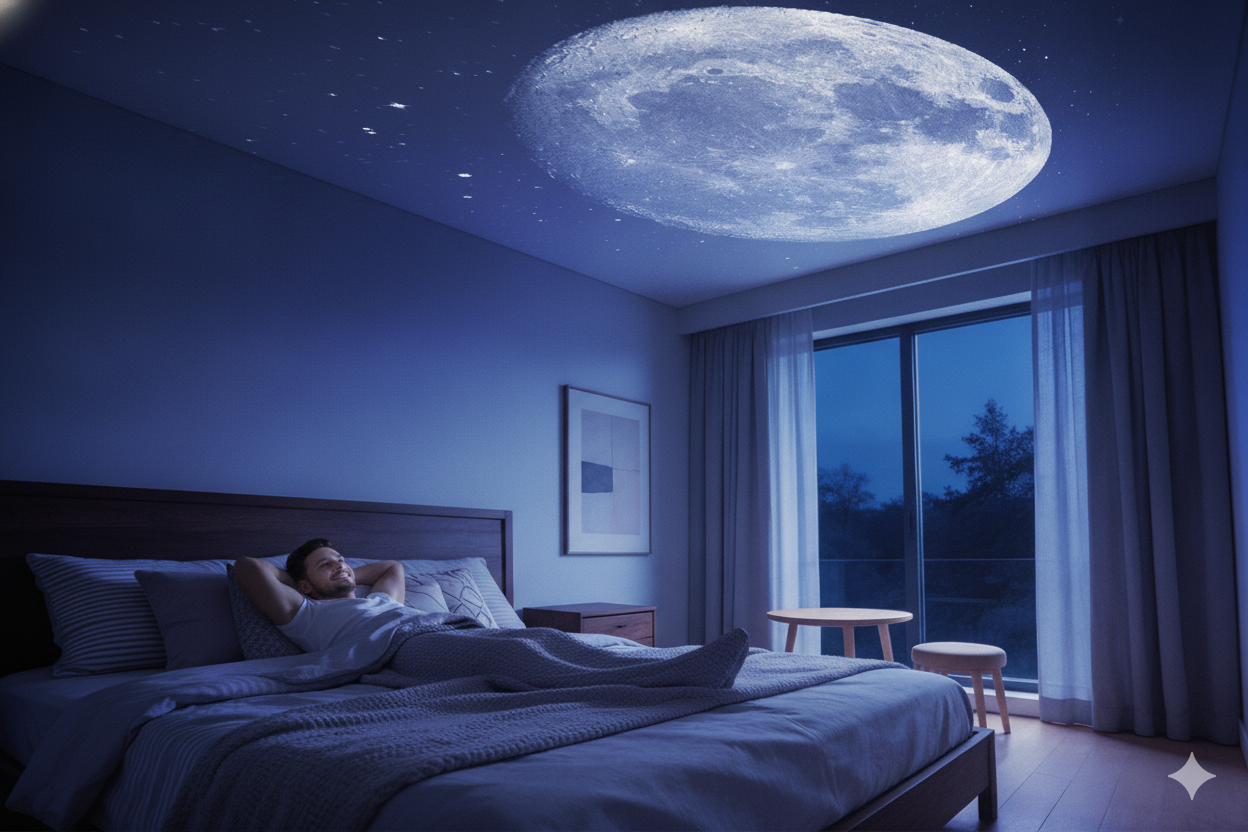
Calming, sensory-friendly lighting works differently. Softer color, gentler movement, and lower intensity give the brain a visual cue that it's time to shift gears, without demanding attention the way a bright overhead bulb does. A dimmable lamp, warmer-toned bulbs, or a gentle light projector can all help a bedroom feel less like an alert room and more like a wind-down one. We'll come back to this, since lighting is one of the simplest changes to make.
3. Build Different Zones for Different Activities
A bedroom doesn't have to be one big, open-ended space. Giving different areas a specific job, even in a small room, helps signal what kind of activity belongs where.
A reading chair in the corner. A specific spot for winding down before sleep. A shelf just for the things you use each morning. When each zone has one job, you have fewer decisions to make about what to do or where, which is one less thing for an already busy brain to sort out.
4. Choose Comforting Textures and Familiar Elements
A soft, familiar blanket. A pillow that always feels the same. A small object that's sat on your nightstand for years. These details can seem minor, but familiarity is calming in its own right.
Predictable textures and objects don't ask your brain to process anything new. They're already known and already comfortable, which makes them some of the lowest-effort calming tools in the whole room.
5. Create a Consistent Wind-Down Space
The same corner, the same light, the same order of steps each night. Consistency itself is calming. When your bedroom cues up the same sequence every evening, your brain doesn't have to figure out what "getting ready for bed" means from scratch each time.
This ties into a bigger idea we've written about before — how to create a calming room environment that supports rest overall, not just for one night, but as something you can repeat with very little effort.
How Sensory Lighting Can Create a More Calming Bedroom
Why Lighting Matters
Your brain reads light as a cue for what kind of state to be in. Bright, cool-toned light says stay alert. Soft, warm, low light says you can start to slow down. This isn't unique to ADHD, but for a brain that's already managing a lot of incoming stimulation, lighting is one of the easier signals to adjust.
It's closely related to something we've explored before too: whether your sleep environment might be keeping your nervous system a little too alert at night. Lighting is often the simplest lever to pull first.
What to Look for in Sensory-Friendly Lighting
Not all "calming" lighting is actually calming. Avoid flashing or strobing effects, harsh and uniform brightness, and overwhelming or clashing colors. Look instead for soft, slow movement, gentle and low-saturation color, and an overall feel that's relaxing rather than stimulating.
Bringing This Into Your Room
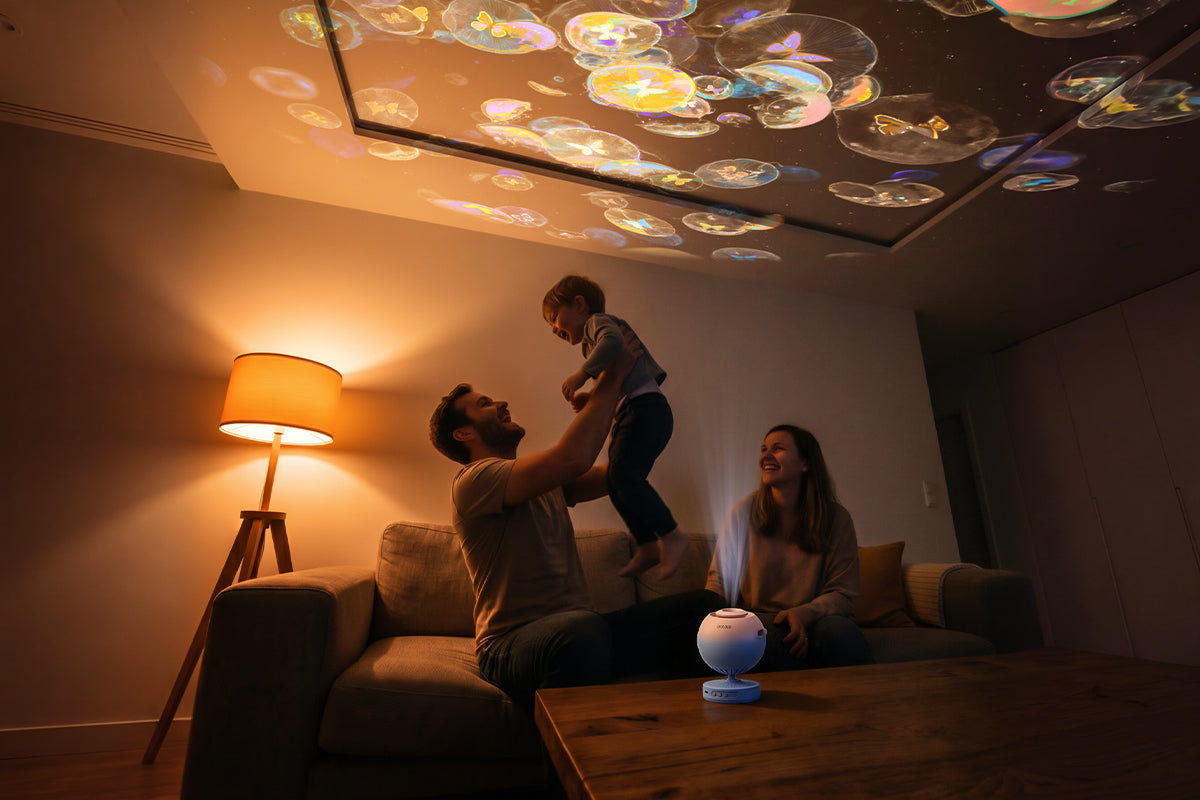
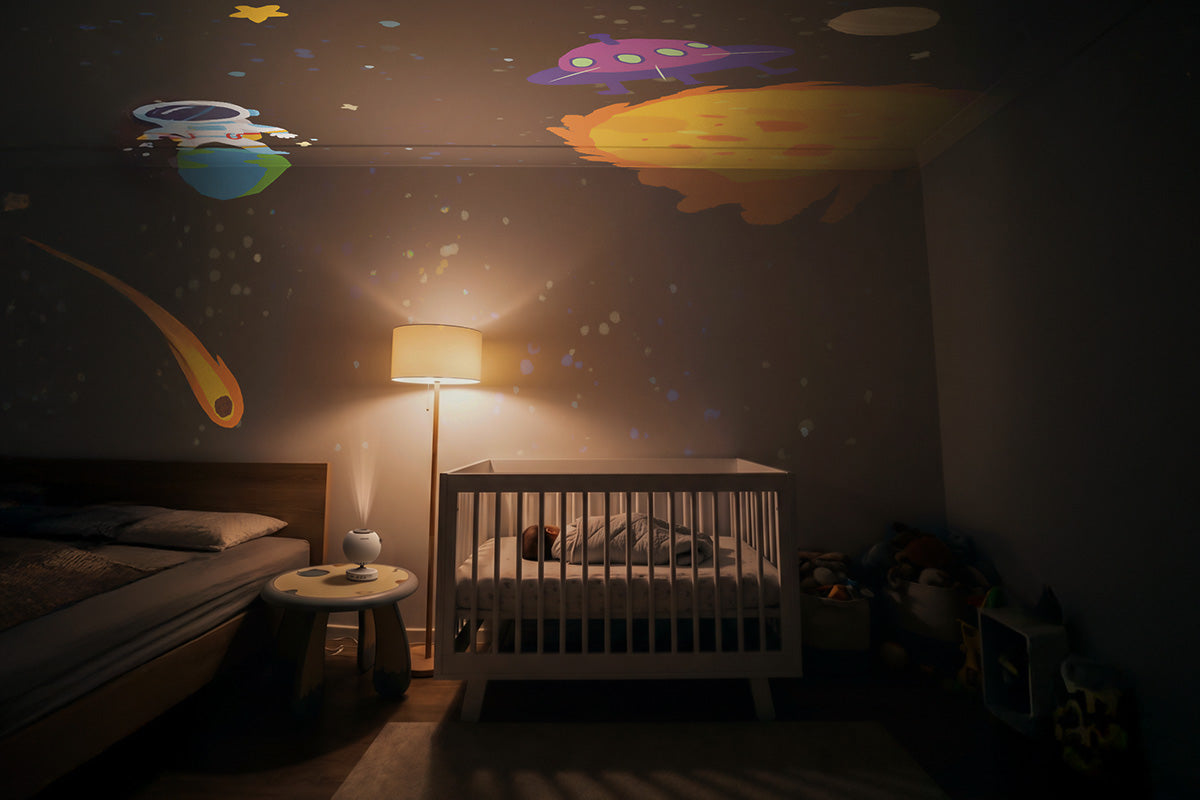
This is where something like a galaxy light projector can fit naturally into a wind-down routine. Instead of a single static glow, a projector like this fills the ceiling and walls with slow-moving, star-like light: immersive rather than sharp, and customizable enough to match the mood you actually want for the evening.
It won't change how your brain processes ADHD, and it isn't meant to. But it can help your bedroom feel like a space built for winding down, rather than one that's quietly asking you to stay alert.
Shop the POCOCO Galaxy Projector →
Simple ADHD Bedroom Reset Checklist
A calming bedroom doesn't happen all at once. If you only have ten minutes today, start here:
- ☐ Clear one visible surface (a nightstand or dresser top)
- ☐ Remove a few unnecessary visual distractions
- ☐ Adjust the lighting for evening, not daytime
- ☐ Set up one small, relaxing corner
- ☐ Build a simple, repeatable evening ritual
You don't need to overhaul your whole bedroom in a single weekend. Pick one thing, clearing a surface, swapping in a softer light, or setting up one wind-down corner, and let the rest follow at its own pace. A calmer room isn't built all at once. It's built one small, intentional choice at a time.
FAQ
What does an ADHD-friendly bedroom look like?
An ADHD-friendly bedroom tends to be organized in a way that's easy to maintain, predictable from day to day, and calming rather than visually loud. The goal isn't a bare or minimalist look. It's a room with less sensory overload, where what you see and interact with each night stays consistent and easy on the brain.
How do you organize a bedroom with ADHD?
Start by reducing the number of small decisions the room asks you to make. Closed storage, a specific spot for everyday items, and simple, visible systems, like one basket for laundry instead of several piles, all help. The simpler the space, the fewer decisions it takes to keep it that way.
Can lighting help with ADHD overstimulation?
Soft, stable lighting can help create a calmer visual environment for some people, and a room with fewer harsh or unpredictable light cues may feel easier to settle into. Lighting isn't a treatment for ADHD, but it can be a simple, low-effort way to reduce one source of sensory input in the evening.
What are sensory lights used for?
Sensory lights, like soft ambient lamps or light projectors, are generally used to create calming, sensory-friendly spaces. Instead of harsh, uniform brightness, they offer gentler, more immersive light that's often used in relaxation areas, wind-down routines, and bedrooms designed to feel less overstimulating.

Commenta
Nota che i commenti devono essere approvati prima di essere pubblicati.
Questo sito è protetto da hCaptcha e applica le Norme sulla privacy e i Termini di servizio di hCaptcha.