




Key Takeaways
- Light is one of the strongest signals your brain uses to decide when to stay awake and when to prepare for sleep.
- During summer, longer daylight hours can delay melatonin release and blur the environmental cues your body normally relies on to wind down at night.
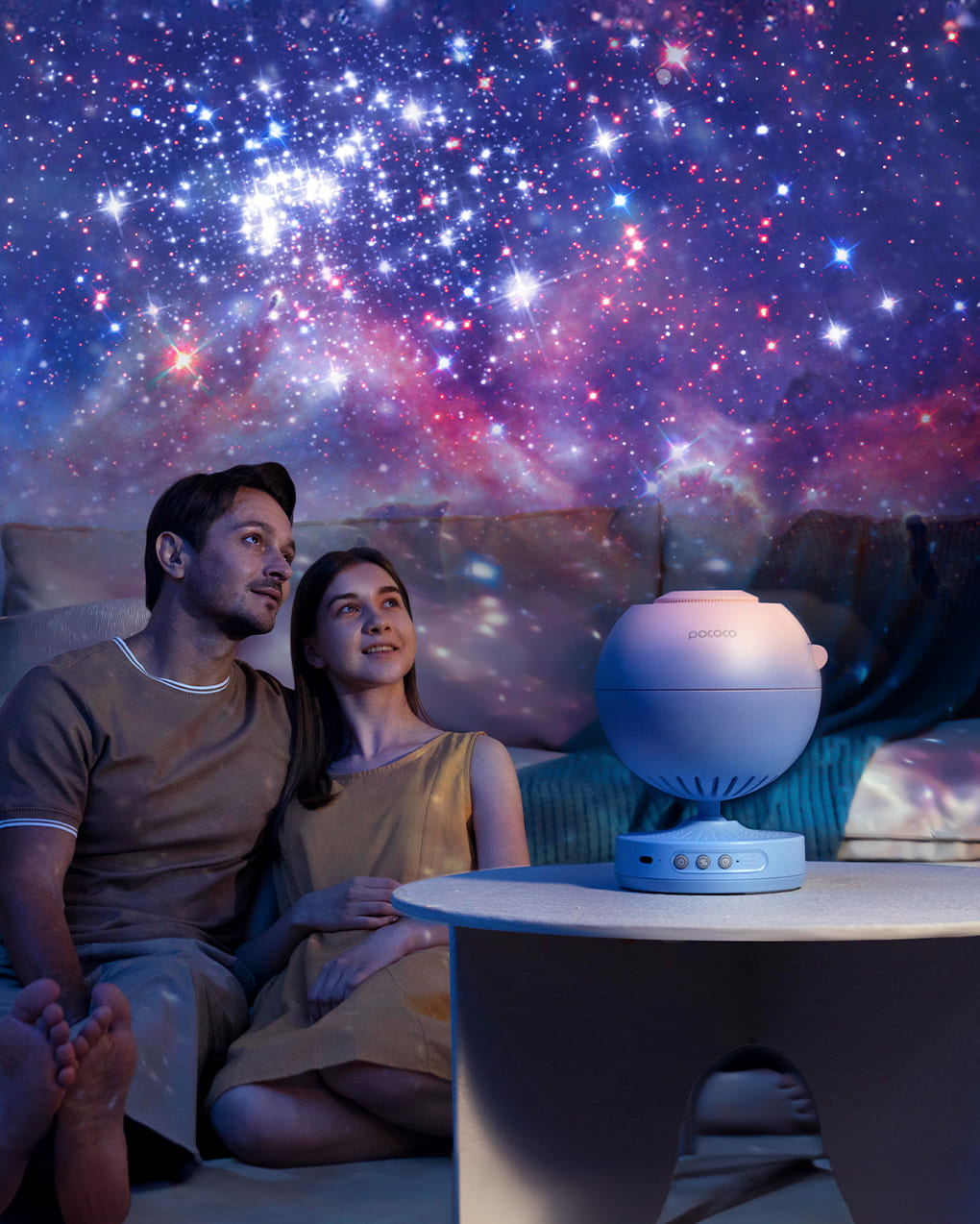
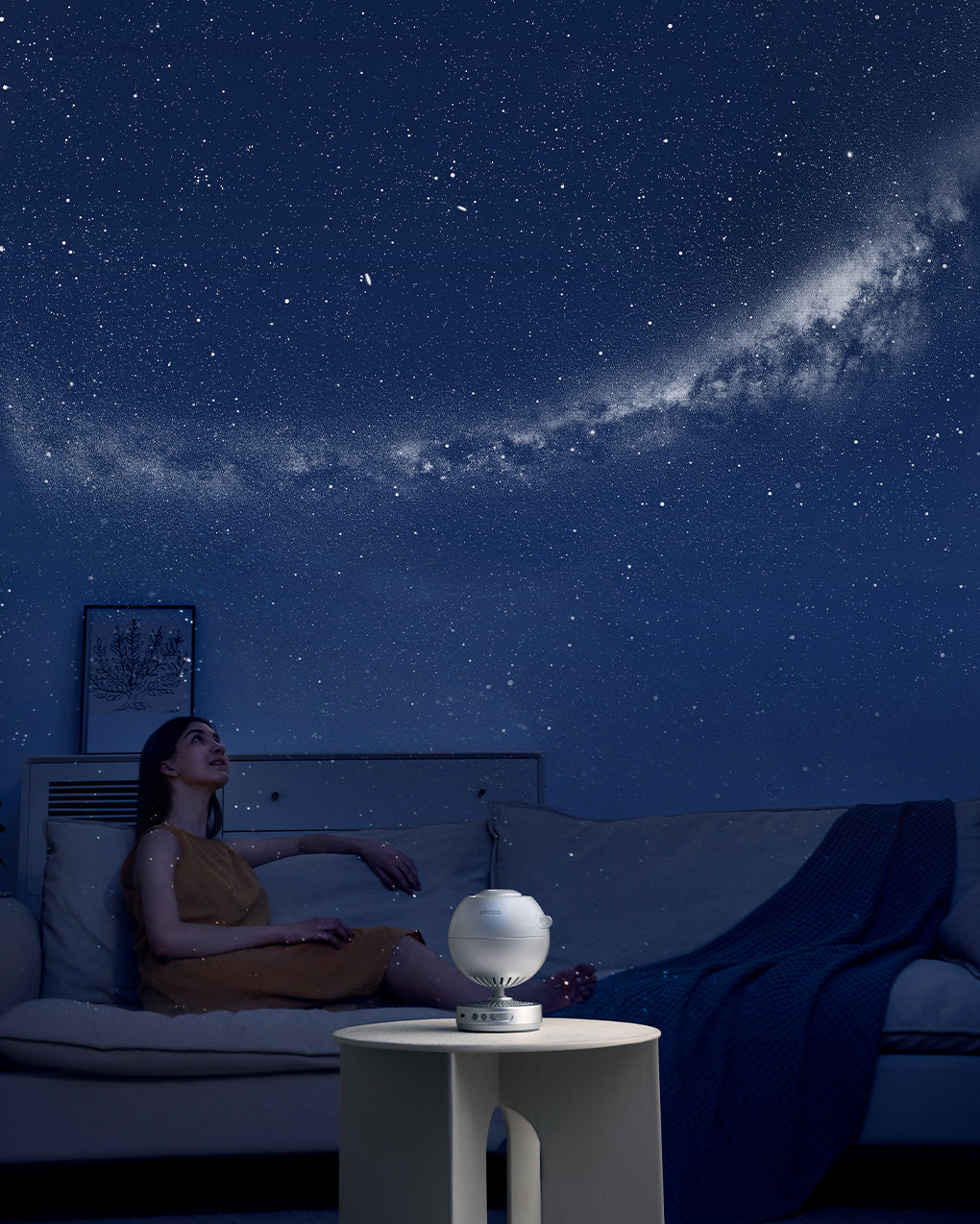
- POCOCO's galaxy projector helps rebuild those missing nighttime signals by transforming your bedroom into a calm, slowly shifting visual environment — giving your brain a clear, consistent cue that the day is over and it's safe to slow down.
Summer is supposed to be the easy season.
And in many ways, it is — until it's time to sleep.
There's a particular feeling that comes with summer nights. The day has technically ended. The hour on the clock says it's time to wind down. But something feels off. The light outside has only just started to fade, and your body — even when it's tired — hasn't quite received the message that today is over.
This isn't a willpower problem. It isn't a sign that your sleep habits have suddenly fallen apart. It's something quieter than that: the long days of summer are gradually shifting the signals your body depends on to move from wakefulness into rest. And when those signals blur, your brain keeps waiting — for something to tell it that the day has finally ended.
That something is your sleep environment — the combination of light, atmosphere, bedroom lighting, and sensory cues your body relies on to recognize nighttime. And in summer, it often stops doing its job without you even noticing.
More people are beginning to rethink their bedroom setting during summer — using softer bedroom lighting, calming visual routines, and ambient tools like galaxy projectors to help the room feel restful again. And once you understand what your body is actually looking for, it becomes clear why these small changes work.
How Longer Summer Days Disrupt Your Sleep Environment
Here's what's actually happening when summer makes sleep feel harder.
Your brain doesn’t rely on a clock to know when it’s time to sleep. It relies on light. As long as light signals are still present — from the sky outside, bright bedroom lighting, or the screen in your hand — your brain continues delaying melatonin, the hormone that helps your body wind down.
In winter, the environment naturally supports this transition. Darkness arrives earlier. Rooms feel quieter. Your body follows.
Summer changes those signals.
Even late at night, the bedroom often still feels active: pale light through the curtains, cool-toned overhead lights, glowing screens, warm air that never fully settles. The room may technically be nighttime, but your nervous system doesn’t fully read it that way.
And your body responds constantly to those environmental cues.
Soft lighting, slower visual stimulation, and a calmer bedroom atmosphere all help signal that the day is ending. When those cues are missing, the brain tends to stay in a lighter state of alertness — even when you're exhausted.
That’s why improving sleep during summer often isn’t just about changing habits. It’s also about changing what your environment is communicating to your body.
Small Changes That Create a Better Sleep Environment in Summer
You don't need to renovate your bedroom. You don't need a strict new routine or a list of things to fix. What matters is simpler: your sleep environment needs to start sending clearer signals that the day is ending.
Here's where to start.
Bedroom lighting changes that help your brain relax at night
In summer, waiting for the sky to get dark often means waiting too long. By the time the light outside finally fades, your body may already be past its natural window for easing into sleep.
So the shift has to start earlier — inside the room, not outside it.
Picture the difference:
A bright overhead light still filling the room with a daytime feel.
Versus a soft lamp in the corner, lowering the visual volume of the space.
The room is smaller, warmer, quieter in its light. That shift in bedroom lighting alone — is one of the fastest ways to change what your sleep space is communicating to your brain. The earlier you begin this transition, the more time your nervous system has to follow.
Give your brain something to settle into
Darkness alone isn't always the answer. Sometimes the mind needs something gentle to settle into — especially after a day filled with screens and stimulation.
What actually helps the brain transition out of its daytime state isn't the absence of all stimulus. It's the presence of the right kind of stimulus: something slow, something soft, something that requires no response.
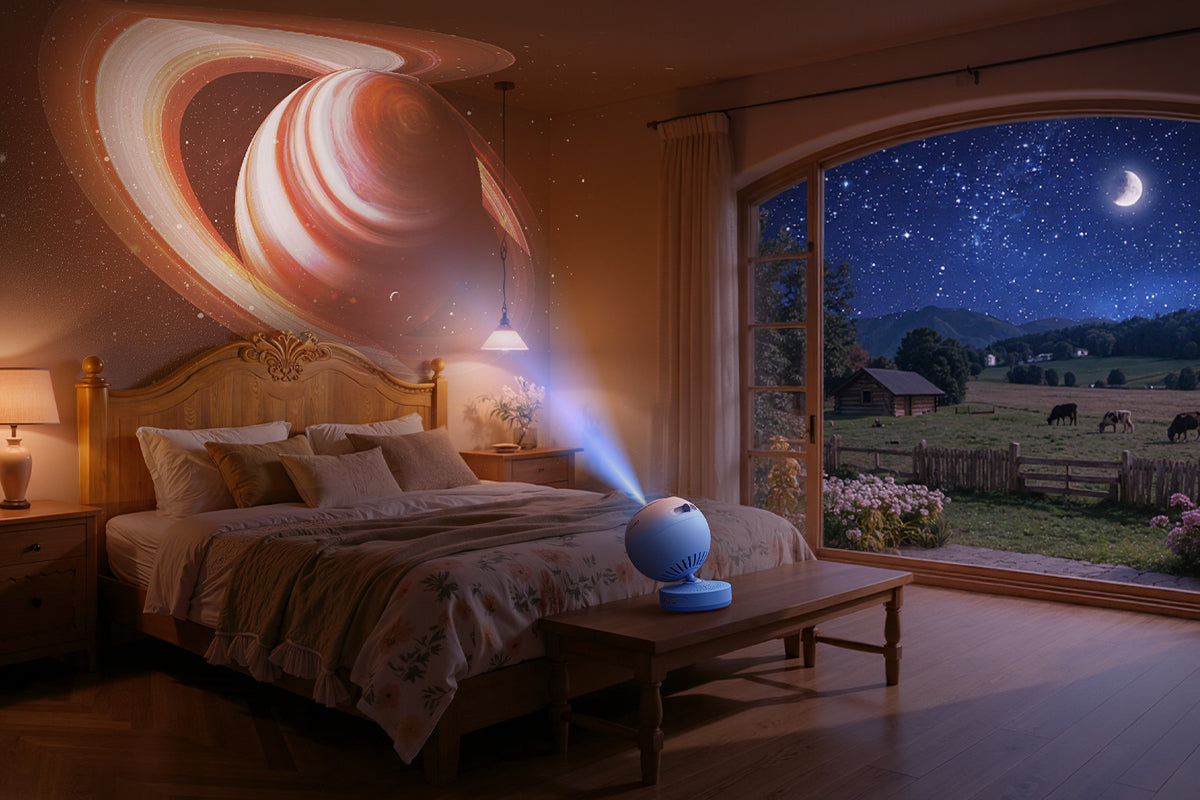
Think of lying in a room where the ceiling is slowly covered in moving stars — deep blue, unhurried, drifting without pattern or demand. A warm amber glow along the far wall. Outside, the last of the summer light. Inside, something that already feels like night. That quality of visual environment — calm, slow, requiring nothing — is what the nervous system is actually looking for when it's trying to let go of the day.
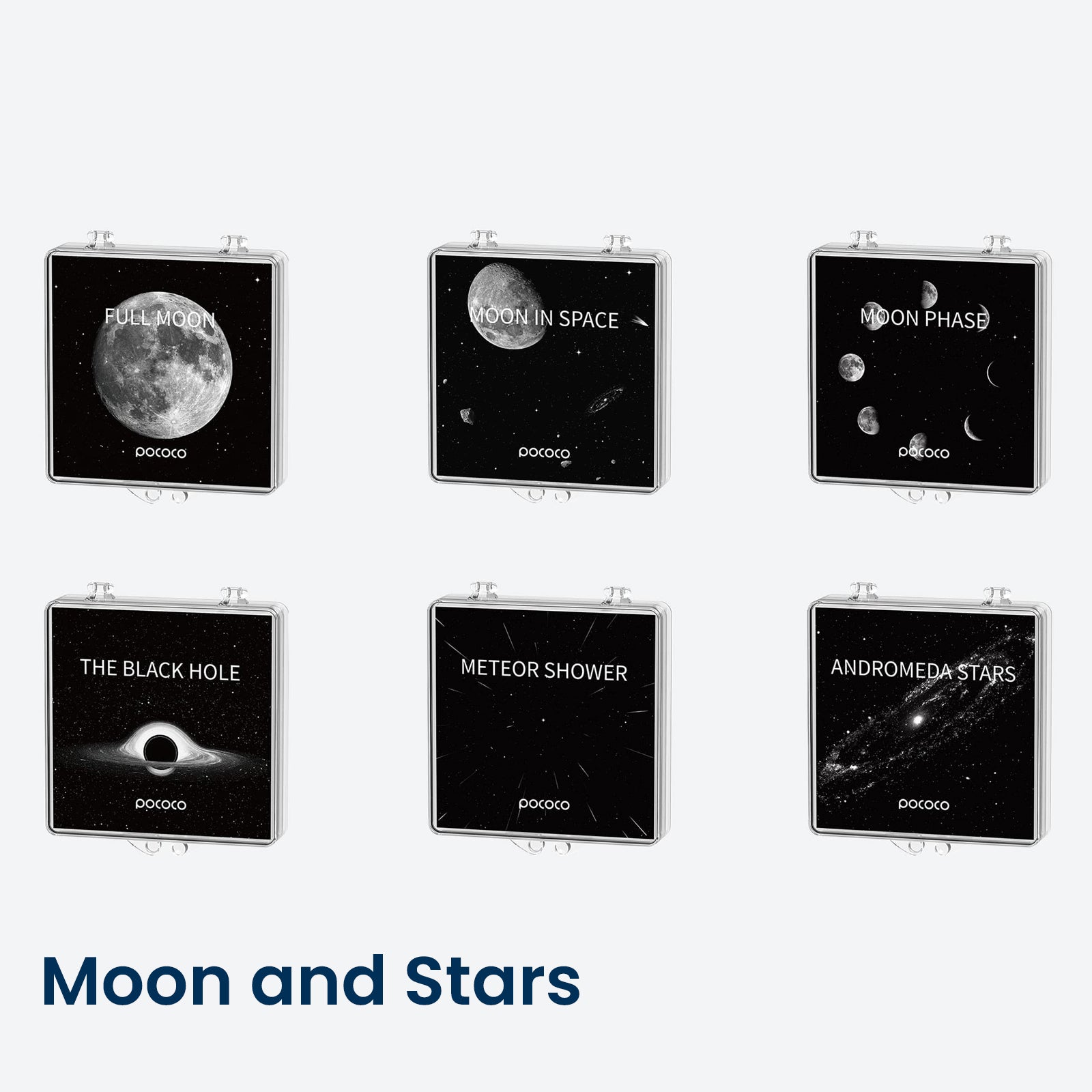
This is why a growing number of people have made ambient visual environments part of their nightly wind-down — not as a novelty, but as a deliberate sensory cue. A galaxy projector works not by filling the room with entertainment, but by doing something much quieter: replacing the visual language of daytime (bright, static, demanding) with something that reads unmistakably as night. Slow movement. Deep color. The kind of image the brain doesn't need to interpret or react to.
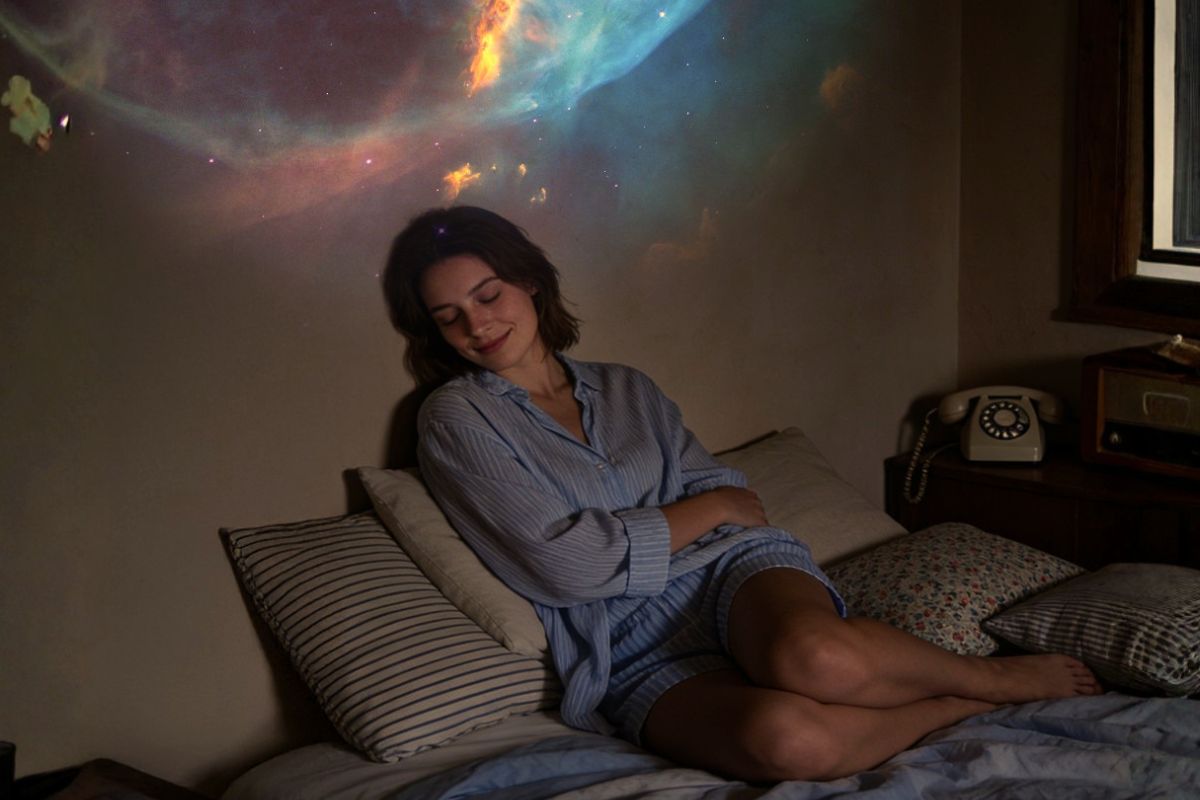
When the room shifts like this, something tends to happen in the body. The pace changes. Breathing slows. The nervous system, no longer receiving signals that say stay alert, begins to do what it's been waiting to do all along.
It becomes, for many people, the moment the room finally feels like night.
Build a rhythm your body can recognize
Summer naturally disrupts routine. Later dinners, social evenings that stretch past their original endpoint, vacations that dissolve the structure of ordinary days. This isn't a problem to be fixed so much as a reality to be worked with.
A night routine doesn't need to be elaborate or perfectly consistent. What it needs is one quality: recognizability. Your body doesn't respond to rules — it responds to patterns. When the same sequence of signals begins to appear each evening, even a simple one, the nervous system starts to anticipate what comes next. The transition into sleep begins before you've even gotten into bed.
Dimming lights. Turning on soft lighting like a galaxy projector. Making tea. Slowing the environment down in the same order each night.
Over time, your body begins to associate these signals with one meaning: The day is over now.
FAQ: Sleeping Better When the Sun Sets Too Late
Why is it harder to sleep during summer?
Longer daylight hours delay melatonin release, so your brain receives the “night signal” later than usual. At the same time, bedrooms often stay brighter and more stimulating, which makes it harder for your body to fully recognize that it’s time to wind down.g.
What type of bedroom lighting is best for sleep?
Warm, low, and dim lighting works best. In the hour or two before bed, switching away from bright overhead lights helps your brain gradually shift out of its daytime alertness and into a more relaxed state.
How do I fall asleep when it stays light outside?
Instead of relying on the outside environment, create nighttime signals inside your room. Use blackout curtains or blinds to limit the light entering from outside. Shift your bedroom lighting to warm, dim sources well before your intended bedtime. And consider introducing a calm visual environment — like a galaxy projector — that replaces the bright, stimulating signals of a summer evening with something the brain reads as night. The goal is to make the room itself feel like nighttime, independent of what's happening outside the window.
Can relaxing lights improve sleep quality?
Yes. Warm, dim lighting supports melatonin production, while bright cool light does the opposite. The type of light in your bedroom directly affects how easily your body transitions into sleep.
Can changing my sleep environment really make a difference?
Yes — more than most people expect. Your brain is constantly responding to light, stimulation, and atmosphere. When your environment becomes calmer and darker, your nervous system naturally begins to slow down.
How do I build a night routine when my summer schedule keeps changing?
Start smaller than you think you need to. A night routine doesn't have to be a full sequence of activities — it just has to be consistent enough that your body begins to recognize it as a signal. Even something as simple as dimming the lights and turning on a projector at roughly the same time each evening can begin to create that association. The nervous system is remarkably good at learning patterns; it doesn't require perfection. What it responds to is repetition. Start with one or two things that feel genuinely manageable, and let the rhythm build from there.
Sometimes Better Sleep Starts With the Room
Summer sleep struggles aren't a personal failing. They're what happens when the season quietly removes the environmental signals your body has always used to find its way to rest — and nothing steps in to replace them.
You don't need to fix everything at once. You don't need a perfect bedroom or a perfectly disciplined schedule. What your body is looking for is simpler than that: a relaxing sleep environment that begins to feel like night before you need to sleep. Light that softens. A pace that slows. Something to settle into.
When those things are present, the body tends to know what to do with them. It's been doing this for a very long time.
Sometimes better sleep doesn't begin with forcing yourself to rest — it begins when the room finally starts to feel like night again.


Zostaw komentarz
Wszystkie komentarze są moderowane przed opublikowaniem.
Ta strona jest chroniona przez hCaptcha i obowiązują na niej Polityka prywatności i Warunki korzystania z usługi serwisu hCaptcha.